
InsightsSaaS
AI SaaS Product Development: Complete Guide for Businesses 2026
Learn how to build AI SaaS products in 2026, covering strategy, tech stack, costs, challenges, and how to leverage AI for scalable growth.

AI SaaS product development is transforming how modern businesses build and scale digital products. By combining artificial intelligence with cloud-based SaaS products, companies can automate processes, analyze user data, and make smarter, data-driven decisions. This not only improves efficiency but also helps improve customer experience and increases overall customer satisfaction.
Today, many SaaS companies are using AI technology, including machine learning algorithms, natural language processing (NLP), and generative AI, to create smarter and more powerful platforms. These AI SaaS solutions provide personalized user experiences, reduce manual work, and give businesses a strong competitive edge in the market.
A successful AI SaaS product starts with the right MVP & Product Strategy, where businesses focus on building a simple version first and then improving it over time. This approach helps validate ideas quickly, reduce risks, and support long-term growth.
In this guide, you will learn how AI is transforming SaaS products, the key steps to building an AI-driven platform, the costs involved, and the common challenges businesses face. You will also understand how to leverage AI using modern AI-powered tools to build scalable and future-ready solutions.
What Is A SaaS Product?
A SaaS product (Software as a Service) is a cloud-based application that users can access through a browser without installation. These SaaS products are widely used by businesses because they are scalable, cost-effective, and easy to manage.
Modern SaaS companies rely on cloud infrastructure to store and manage user data, helping businesses make smarter, data-driven decisions. These platforms also improve customer satisfaction by offering seamless access and updates. Businesses today are rapidly adopting SaaS Solutions to streamline operations and gain a competitive edge in the digital market.
What Happens When We Integrate AI Into SaaS Products?
When artificial intelligence is integrated into SaaS platforms, they become AI-driven systems capable of automation, prediction, and personalization. AI technology processes large volumes of user data to deliver smarter insights and improve performance.
Technologies like machine learning algorithms, natural language processing (NLP), and generative AI allow SaaS platforms to provide personalized user experiences and automate tasks using AI-powered tools. With the help of Custom Web Development, businesses can build intelligent SaaS platforms that fully leverage AI and deliver better results.
Key Approaches to Integrating AI into SaaS Products
There are multiple ways to integrate AI into modern AI SaaS solutions:
Automation: Use AI to automate repetitive processes
Predictive Analytics: Use machine learning algorithms for forecasting
NLP Integration: Enable chatbots and support using natural language processing (NLP)
Generative AI: Create content and automate workflows
Data Insights: Use AI models to extract meaningful insights from data
These approaches help businesses build scalable and intelligent AI SaaS tools. Companies offering AI & ML Solutions can help implement these strategies effectively for better performance.
A Step-by-Step Approach to Creating an AI-Driven SaaS Platform
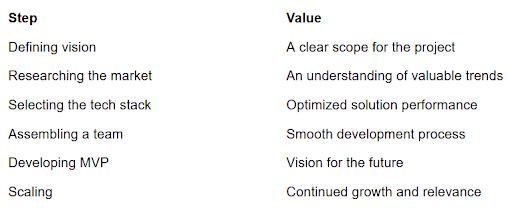
1. Defining Your Vision: Planning and Ideation
The first step in AI SaaS product development is to clearly define your idea. You should list all features, then divide them into must-have and nice-to-have. This helps you understand how your final SaaS product will look and what problem it will solve.
When you plan properly, you can also estimate cost, identify competitors, and find your position in the market. A clear vision helps businesses leverage AI, use the right AI technology, and build solutions that improve customer satisfaction and give a strong competitive edge.
2. The Discovery Phase: Researching and Understanding Needs
Research is a key part of building successful AI SaaS solutions. In this step, you study your target audience, analyze competitors, and understand market trends. This helps you identify what users expect and how your product can stand out.
You should also explore how artificial intelligence, machine learning algorithms, and natural language processing (NLP) can solve real problems. Strong research ensures your platform delivers value, improves personalized user experiences, and makes better data-driven decisions.
3. Selecting the Right Tech Stack for Your AI SaaS Solution
Choosing the right technology stack is very important for building scalable AI SaaS tools. Your tech stack affects the performance, speed, and future growth of your platform.
It’s important to choose tools that support AI models, generative AI, and handle large amounts of user data efficiently. A well-selected stack helps reduce cost, improve system performance, and build reliable AI-driven applications that compete with top SaaS companies.
4. Assembling a Skilled Development Team
A strong team is the backbone of successful AI SaaS product development. You need developers, AI engineers, designers, and project managers who understand modern AI technology.
Whether you hire in-house or outsource, make sure the team has experience with AI-powered tools, machine learning algorithms, and SaaS platforms. A skilled team ensures smooth development, better quality, and helps overcome common challenges in AI SaaS projects.
5. Developing a Minimum Viable Product (MVP)
Building an MVP (Minimum Viable Product) is one of the most important steps in creating AI SaaS solutions. An MVP includes only the core features needed to test your idea in the market.
It allows you to collect real user data, test your AI model, and understand how users interact with your product. This step helps improve performance, reduce risk, and refine your platform before launching a full version of your AI-driven SaaS product.
6. Scaling Your AI SaaS Product for Growth
AI can learn and improve as time passes, so keep the team available for further development. Post-launch updates will help refine the algorithm, add new functions, and handle maintenance to boost performance.
Understanding the Costs of Developing an AI-Powered SaaS Product
The cost of developing AI SaaS products depends on complexity, features, and technologies used. Platforms using generative AI, NLP, and advanced analytics are more expensive but deliver higher ROI.
Costs include infrastructure, development, and ongoing maintenance. However, businesses benefit from automation and improved efficiency using AI-powered tools. Many businesses combine this with Mobile App Development to expand their SaaS platforms across devices.
7 Factors Affecting the Cost of AI SaaS Product Development
After understanding the overall cost of building an AI SaaS solution, it’s important to look at the key factors that influence it. These elements are part of the development process and can be adjusted to manage your budget while still building a high-quality AI-driven platform.
1. Features and Product Complexity
The number of features and the complexity of your AI SaaS product directly affect the cost. A platform with advanced capabilities like generative AI, automation, and analytics will require more time and resources.
That’s why it’s important to focus on essential features first and avoid overloading your product. A balanced approach helps you build effective AI SaaS solutions while keeping costs under control and still improving customer satisfaction.
2. Platform Selection and Cost Impact
The platform you choose, web, mobile, or desktop, also impacts development cost. Building an AI SaaS platform for multiple platforms requires different technologies and increases overall expenses.
In most cases, businesses start with one platform and scale later. Many companies combine SaaS platforms with mobile app development to expand reach while managing costs effectively.
3. Technology Architecture Decisions
The architecture of your platform plays a major role in both performance and cost. Choosing the right cloud infrastructure, microservices setup, and data storage system is essential for handling large amounts of user data.
A strong architecture supports scalable AI SaaS tools, improves system performance, and ensures your AI models run efficiently. Making the right decisions early helps avoid future costs and technical issues.
4. UI/UX Design and Its Impact on Cost
Design is a critical part of any SaaS product. A well-designed interface improves usability and creates better personalized user experiences, which leads to higher customer satisfaction.
However, designing a high-quality UI/UX often requires multiple revisions and testing, which can increase cost. Early planning and user feedback can help streamline the process and reduce unnecessary expenses.
5. Industry Requirements
The industry you target also affects the cost of your AI SaaS solutions. Some industries, like healthcare and fintech, require strict compliance, security, and data protection measures.
For example, healthcare platforms must follow privacy laws, while fintech solutions need strong security systems. These additional requirements increase development complexity and cost but are necessary for building reliable AI-driven products.
6. Development Team Location
The cost of hiring a development team varies by region. Teams in North America and Western Europe are usually more expensive, while other regions may offer lower rates.
However, choosing the cheapest option is not always the best strategy. It’s important to find experienced developers who understand AI technology, machine learning algorithms, and SaaS development. A balanced choice ensures quality work and reduces risks related to challenges in AI SaaS projects.
7. Maintenance and Future Updates
Building an AI SaaS product is not a one-time task. After launch, ongoing maintenance and updates are necessary to keep the platform running smoothly.
This includes fixing bugs, improving performance, and adding new features using the latest AI-powered tools and technologies like generative AI. Regular updates help maintain system stability, improve performance, and ensure the long-term success of your AI SaaS platform.
Successful AI SaaS Platform Examples to Inspire Your Project
Many companies are already using AI SaaS tools successfully:
CRM platforms with AI-driven insights
Chatbots powered by natural language processing (NLP)
Marketing tools using generative AI
Analytics platforms for data-driven decisions
These solutions help businesses improve efficiency and gain a strong competitive edge.
Businesses are also leveraging AI Chatbot Development to enhance customer engagement and support systems.
Common Challenges in AI SaaS Platform Development
Despite its benefits, there are several challenges in AI SaaS:
Managing large-scale user data
High development and infrastructure costs
Selecting the right AI model
Ensuring data security and compliance
Maintaining system scalability
Integrating systems like Custom CRM can help manage operations and improve performance.
The Future of AI SaaS Development
The future of AI SaaS development is growing fast as more businesses adopt artificial intelligence to improve their products and services. Modern SaaS companies are using advanced AI technology to build smarter platforms that can automate tasks, analyze user data, and deliver better results.
One of the biggest trends is the rise of generative AI, which helps create content, automate workflows, and improve productivity. Along with this, machine learning algorithms and natural language processing (NLP) are making AI SaaS solutions more intelligent and user-friendly. These technologies allow businesses to offer highly personalized user experiences, which directly improves customer satisfaction.
In the coming years, more companies will leverage AI to make faster and smarter data-driven decisions. AI-powered automation will reduce manual work, save time, and increase efficiency. As a result, businesses using AI-driven platforms will gain a strong competitive edge in the market.
Another important shift is the growth of advanced AI-powered tools that can learn and improve over time. These tools will help businesses scale faster and adapt to changing customer needs. As AI continues to evolve, AI SaaS products will become more powerful, secure, and essential for businesses of all sizes.
Overall, the future of AI SaaS development is focused on innovation, automation, and better user experiences, making it a key driver of digital transformation.
Why Choose Codieshub for AI SaaS Product Development?
Codieshub is a trusted partner for building scalable and high-performance AI SaaS solutions. With strong expertise in AI technology, machine learning algorithms, and modern SaaS architecture, their team helps businesses create powerful and reliable AI-driven platforms. They focus on understanding business needs, using the right AI models, and delivering solutions that improve efficiency, automate processes, and enhance customer satisfaction.
Their approach combines innovation, strategy, and technical excellence to build products that give businesses a strong competitive edge. From idea validation to deployment and scaling, Codieshub ensures smooth development using advanced AI-powered tools and best practices. They also work across multiple domains, and their experience in different industries we serve allows them to build customized solutions tailored to specific business requirements.
Final Thought
Building an AI-powered SaaS product is a strategic investment that can transform your business. By combining AI technology, machine learning algorithms, and data-driven decisions, you can create personalized user experiences and gain a competitive edge in the market. Proper planning, the right tech stack, and a skilled development team ensure that your AI SaaS solution is scalable, reliable, and user-friendly.
Partnering with experts like Codieshub helps you navigate challenges, optimize costs, and accelerate development. From MVP & Product Strategy to full deployment and maintenance, every step is carefully executed to maximize ROI.
Take the next step and book a call today to start building your AI SaaS platform that delivers real results for your business.
Frequently Asked Questions
1. What is an AI-powered SaaS product?
An AI-powered SaaS product integrates artificial intelligence and machine learning algorithms into a cloud-based software solution. It enhances user experiences, automates repetitive tasks, leverages data-driven decisions, and provides personalized insights to improve customer satisfaction and business efficiency across industries.
2. How does AI improve SaaS solutions?
AI improves SaaS solutions by analyzing user data in real time, predicting trends with predictive analytics, automating tasks, and delivering personalized user experiences. It helps businesses gain a competitive edge, reduce errors, and continuously improve over time using AI-driven tools and machine learning models.
3. What factors affect AI SaaS development costs?
Costs are influenced by product complexity, the number of features, UI/UX design requirements, tech stack, deployment platforms, team location, and maintenance needs. Industries like healthcare or fintech may increase costs due to regulations. Smart planning can optimize budget, scalability, and long-term value.
4. How long does it take to build an AI SaaS platform?
Development timelines depend on complexity, features, integrations, and team expertise. A minimum viable product (MVP) can be built in a few months, while fully-featured AI SaaS platforms may take 6–12 months. Using iterative development and early testing accelerates deployment and reduces errors.
5. What are common challenges in AI SaaS development?
Challenges include integrating AI models effectively, handling large amounts of data, maintaining system scalability, ensuring data privacy, and balancing performance with cost. Engaging skilled developers and following best practices in Custom Web Development can mitigate risks and streamline delivery.
6. Can AI SaaS improve customer satisfaction?
Yes, AI SaaS platforms enhance customer satisfaction by providing personalized experiences, fast issue resolution, predictive insights, and automation of routine tasks. Leveraging AI-powered tools ensures businesses can respond to user needs in real time, improving engagement and retention.
7. Why choose Codieshub for AI SaaS development?
Codieshub offers expertise in AI & ML solutions, Custom CRM, and UI/UX design to build AI-driven SaaS products. They guide businesses from MVP & Product Strategy to full-scale deployment, helping reduce costs, improve performance, and deliver scalable, user-friendly solutions for industries we serve.