
InsightsHealthcare
AI Radiology Information System (RIS): Features & Guide 2026
Discover how AI-powered Radiology Information Systems streamline workflows, boost reporting speed, and ensure HIPAA compliance in 2026.
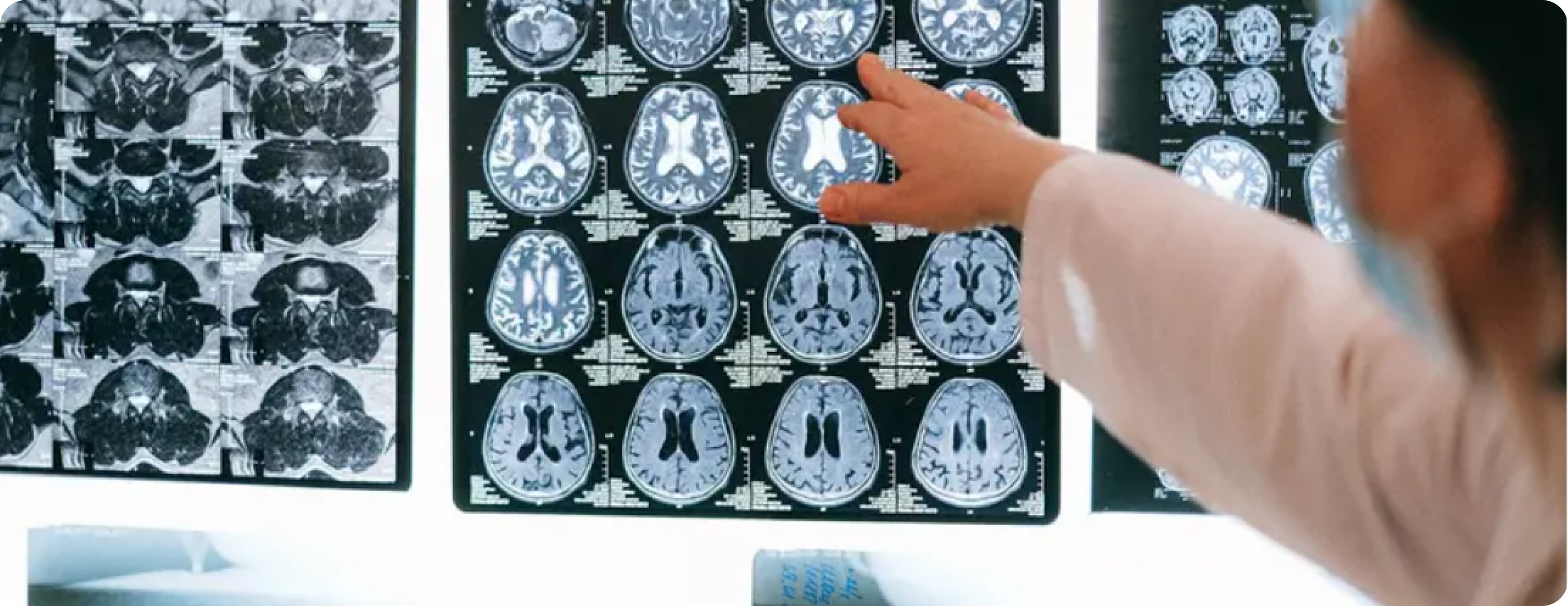
A radiology department at a regional medical center processes 340 imaging studies per day. Each study follows a workflow that begins with order receipt and patient scheduling, moves through technologist image acquisition and quality review, proceeds to radiologist interpretation and report generation, and concludes with report delivery to the ordering provider and documentation in the patient's clinical record.
At each step of this workflow, information must be accurately captured, correctly routed, and reliably documented. A scheduling error sends the wrong patient to the wrong modality. A missing clinical indication delays a radiologist who cannot interpret a chest CT without knowing whether the ordering indication is pulmonary embolism or lung cancer screening, the clinical context that determines the reading protocol. A report that is dictated but not signed delays communication to the ordering physician. A critical finding that is not flagged for immediate communication reaches the ordering provider hours after it should have.
The radiology information system, the software platform that manages this entire clinical and operational workflow, is the operational backbone of every radiology department. And the difference between a basic RIS that manages workflow transactions and an AI-powered RIS that optimizes each workflow step, predicts operational bottlenecks, supports radiologist interpretation with clinical decision intelligence, and ensures critical finding communication is the difference between a radiology operation that functions and one that excels.
In 2026, AI radiology information systems are transforming radiology operations across hospital radiology departments, outpatient imaging centers, teleradiology practices, and radiology groups. The organizations deploying them effectively are seeing measurable improvements in report turnaround time, radiologist productivity, critical finding communication rates, scheduling efficiency, and the operational analytics that drive continuous radiology department performance improvement.
Key Takeaways
AI radiology information systems use machine learning, NLP, and workflow automation to optimize imaging order management, scheduling, technologist workflow, radiologist reporting, critical finding communication, and radiology department analytics, transforming transactional RIS workflow management into intelligent operational optimization
Radiology report turnaround time, the interval from image acquisition to report delivery to the ordering provider, is the primary operational quality metric in radiology, and AI workflow optimization that reduces bottlenecks at each RIS workflow step directly improves turnaround time performance
The highest-value AI capabilities are intelligent exam scheduling optimization, AI-assisted radiology report generation, critical finding detection and communication automation, radiologist workload balancing, prior study retrieval and comparison, and radiology department performance analytics
HIPAA compliance is required throughout radiology orders, imaging study records, radiologist reports, and critical finding communications, as they are protected health information requiring full technical safeguards, including encryption, access controls, and comprehensive audit logging
DICOM integration: the standard protocol for medical image management and communication is the foundational technical requirement that connects the RIS to the picture archiving and communication system (PACS) and to modality worklist management for technologist workflow
FDA regulatory classification applies to AI RIS features that make diagnostic claims. AI tools that analyze imaging study content to detect specific findings or suggest diagnoses require FDA clearance as Software as a Medical Device, while AI tools that optimize workflow, assist report generation, and manage communication are generally not regulated as SaMD
Total development cost ranges from $65,000 for a focused scheduling and reporting MVP to $480,000 or more for a full AI-powered radiology information and workflow management platform
What Is an AI Radiology Information System?
An AI radiology information system is a technology platform that uses artificial intelligence, machine learning, NLP, predictive analytics, and workflow automation integrated with traditional RIS functions to manage, optimize, and provide clinical intelligence across the complete radiology department workflow, from imaging order receipt through patient scheduling, technologist workflow management, radiologist interpretation support, report generation, critical finding communication, and department performance analytics.
Traditional radiology information systems manage the transactional workflow of radiology operations, receiving imaging orders, scheduling appointments, generating modality worklists for technologists, routing completed studies to radiologists, managing report dictation and transcription, and distributing completed reports to ordering providers. These transactional functions are necessary but not sufficient for the operational performance that modern radiology departments require.
AI radiology information systems add the intelligence layer that optimizes each transactional workflow step: scheduling optimization that assigns each study to the optimal time slot based on equipment availability, radiologist expertise, patient preparation requirements, and department throughput targets; workload balancing that distributes studies across the radiologist panel based on subspecialty expertise and current reading queue depth; report generation assistance that pre-populates report templates from clinical indication and prior study data; and analytics that identify the specific workflow bottlenecks producing turnaround time delays before they affect clinical operations.
The distinction between AI RIS and traditional RIS is operational intelligence: the ability to not just record what is happening in the radiology workflow but to predict what should happen next, identify where workflow is breaking down, and provide the clinical and operational support that improves both efficiency and quality across the complete radiology operation.
Why Is AI Transforming Radiology Information Systems in 2026?
What Operational Pressure Is Driving AI RIS Adoption?
Radiology departments face simultaneous pressure from multiple directions: increasing imaging volume as clinical imaging utilization grows; radiologist workforce constraints from shortage and geographic maldistribution; increasing subspecialization requirements that complicate worklist routing; and quality expectations from referring clinicians and accreditation bodies that demand faster turnaround times and more consistent critical finding communication.
Managing these competing pressures through traditional RIS workflow management, where scheduling is manual, worklist routing is rule-based, and turnaround time monitoring is retrospective, produces the operational variability, bottlenecks, and quality failures that AI optimization directly addresses. AI RIS that predicts scheduling demand, optimizes radiologist assignment, monitors turnaround time in real time, and identifies emerging bottlenecks before they affect performance provides the operational intelligence that radiology department leaders need to manage at scale.
How Does AI Report Generation Change Radiologist Productivity?
Radiology report generation, the core clinical function of the radiologist, is time-consuming in ways that AI can meaningfully assist without replacing radiologist clinical judgment. Template pre-population from clinical indication, patient history, and prior study data reduces the structured data entry component of report generation. AI-structured report generation that organizes findings into standardized report sections reduces the cognitive overhead of report organization. And natural language processing that transforms dictated radiology report content into structured, searchable report data improves the downstream clinical utility of radiology reports.
For radiology departments where report turnaround time is a primary performance metric and for radiologists whose productivity is measured in reports per hour, AI report generation assistance that reduces per-report time by 15 to 25% without compromising report quality is a direct productivity improvement that scales across the full daily study volume.
What Critical Finding Communication Problem Does AI Address?
Critical finding communication is the process of immediately notifying ordering providers when imaging studies reveal findings requiring urgent clinical action and is a patient safety requirement with specific documentation standards imposed by the Joint Commission, ACR guidelines, and medical staff bylaws. Failures in critical finding communication are documented adverse events that result in delayed patient care, patient harm, and regulatory citations.
AI critical finding detection and communication automation, identifying studies with critical findings from radiologist report content, initiating multi-channel notification to the ordering provider, tracking notification completion, and documenting the communication in the clinical record provides the systematic critical finding management that manual communication protocols consistently fail to deliver reliably at volume.
What Are the Key Use Cases for AI Radiology Information Systems?
Intelligent Exam Scheduling Optimization
AI scheduling optimization for radiology departments manages the multi-constraint scheduling problem that manual scheduling cannot solve optimally at scale, assigning each imaging study to a time slot that satisfies patient preparation requirements, equipment availability, technologist certification requirements, subspecialty scheduling constraints, and department throughput targets simultaneously.
For MRI scheduling specifically, where scan duration varies significantly by protocol, patient positioning requirements vary by body region, and contrast administration constraints affect scheduling adjacency, AI scheduling optimization that accounts for the full constraint set produces scanner utilization rates significantly higher than manual scheduling while reducing patient wait times for time-sensitive studies.
For radiology departments managing multiple modalities across multiple locations, AI scheduling that optimizes across the full modality and location portfolio, directing patients to the optimal combination of location, modality, and time slot for their specific study requirements, improves both department efficiency and patient access to imaging services.
Our AI and ML solutions team builds radiology scheduling optimization models with modality-specific constraint sets, subspecialty routing logic, and throughput optimization that radiology operational management requires.
AI-Assisted Radiology Report Generation
AI report generation assistance for radiology pre-populating report templates from clinical indication and prior study data, generating structured report frameworks from dictated content, and providing AI-generated impression suggestions based on findings documentation reduces per-report time and improves report structure consistency without replacing radiologist clinical judgment.
For high-volume radiology departments where radiologists read hundreds of studies per day across multiple body regions and modalities, AI report assistance that reduces the time required for template population, structured section organization, and impression generation provides cumulative productivity improvement that affects department-level throughput.
AI structured reporting generating reports in standardized formats like RadLex-coded reports and ACR standardized reporting templates improves the downstream clinical utility of radiology reports by producing consistently organized, searchable, and clinically actionable report content that narrative dictation cannot consistently deliver.
Critical Finding Detection and Communication
AI critical finding management identifying critical findings from completed radiologist reports using NLP, initiating immediate multi-channel notification to ordering providers, tracking notification completion and response, and documenting the communication event in the RIS audit trail provides the systematic critical finding management that patient safety requires.
NLP-based critical finding detection that identifies the specific language patterns in radiologist reports associated with findings requiring urgent communication acute pulmonary embolism, tension pneumothorax, acute intracranial hemorrhage, aortic dissection flags completed reports for a critical-finding communication workflow without requiring radiologists to separately categorize each report as critical.
For radiology departments where manual critical finding communication produces the documentation gaps and communication delays that Joint Commission surveys identify as deficiencies, AI critical finding management that automates the complete communication workflow from detection through documentation provides the compliance reliability that manual communication protocols cannot consistently deliver.
Radiologist Workload Balancing and Worklist Management
AI worklist management, distributing imaging studies across the radiologist panel based on subspecialty expertise, current reading queue depth, study complexity, and turnaround time priority, optimizes radiologist assignment in ways that static rule-based routing cannot.
For radiology groups covering multiple hospital clients or managing subspecialty reads across a teleradiology platform, AI worklist balancing that distributes studies to the radiologist best positioned to read each study by subspecialty expertise and current availability reduces both turnaround time and the cognitive load of reading studies outside one's subspecialty expertise.
Turnaround time priority management surfacing STAT and urgent studies to the top of each radiologist's worklist based on ordering priority and time-to-read elapsed ensures that time-sensitive studies are read promptly regardless of the order in which they were completed by technologists.
Our EHR and EMR integration practice builds the clinical system integrations that give AI RIS systems access to ordering provider context, patient clinical history, and prior imaging study data that radiologist worklist prioritization and report pre-population require.
Prior Study Retrieval and Comparison Support
Prior study retrieval, identifying and presenting the relevant prior imaging studies for comparison when a radiologist begins reading a new study, is a workflow function that significantly affects both report turnaround time and radiologist diagnostic accuracy. Radiologists who must manually search PACS for relevant priors lose time that AI-automated retrieval recovers, and radiologists who do not have relevant priors available for comparison miss the longitudinal context that prior comparison provides.
AI prior study retrieval that automatically identifies the most relevant prior studies for each new exam based on body region, modality, clinical indication, and the specific findings most likely to require longitudinal comparison, and presents them alongside the current study in the radiologist's reading workflow, provides the prior comparison context that improves both efficiency and diagnostic quality.
Radiology Department Performance Analytics
AI performance analytics for radiology departments continuously monitor turnaround time by modality, radiologist, and study type; equipment utilization rates; scheduling efficiency; critical finding communication compliance; and report quality metrics, providing radiology department directors and radiology group medical directors with the operational intelligence for systematic performance improvement.
Predictive analytics that forecast upcoming study volume based on scheduling data and historical demand patterns, identify equipment maintenance needs from utilization patterns before unplanned downtime occurs, and predict radiologist staffing requirements for upcoming volume surges provide the forward-looking operational intelligence that reactive performance monitoring cannot deliver.
Our healthcare UI/UX design team designs radiology department analytics dashboards tested with real radiology department directors and radiology group administrators because operational dashboards that require radiology operations expertise to interpret are not used by the department leaders who most need the insights.
What Are the Key Features of AI Radiology Information Systems?
Order Management and Clinical Indication Processing
Imaging order receipt from EHR systems through HL7 FHIR and HL7 v2 order messaging, AI clinical indication analysis that validates order appropriateness against ACR Appropriateness Criteria, order routing to the correct modality and scheduling queue, and order status communication back to ordering providers.
DICOM Modality Worklist Management
DICOM modality worklist generation for each imaging modality, presenting technologists with the day's scheduled studies, patient demographics, and protocol assignments directly on the modality console without manual data entry. DICOM study receipt confirmation and quality flagging when acquired images meet or fail to meet technical quality standards.
AI Report Generation Assistance
Structured report template library for all imaging modalities and body regions, AI template pre-population from clinical indication and prior study data, voice recognition integration for report dictation, NLP-based structured report generation from dictated content, and AI impression generation assistance based on findings documentation.
Critical Finding Communication Workflow
NLP-based critical finding detection from completed reports, multi-channel notification workflow including phone, secure message, and EHR alert, notification tracking and escalation for unanswered notifications, and critical finding communication documentation in the RIS audit trail with regulatory compliance reporting.
PACS Integration
Bidirectional PACS integration for study routing to radiologist reading workstations, prior study retrieval and presentation, report association with imaging studies, and image quality flag communication from radiologist to technologist for image repeat or additional views.
Scheduling and Resource Management
AI-optimized scheduling for all imaging modalities with constraint-aware slot assignment, patient appointment reminder automation, preparation instruction delivery, equipment maintenance scheduling integration, and schedule utilization analytics.
HIPAA-Compliant Data Architecture
All RIS data, imaging orders, study records, radiologist reports, critical finding communications, and patient scheduling records are protected health information requiring AES-256 encryption, role-based access controls reflecting radiology department roles, comprehensive audit logging, and Business Associate Agreements with all integrated PACS, EHR, and reporting services.
Our HIPAA-compliant software development practice builds the compliance architecture for radiology information systems handling comprehensive patient imaging and clinical data.
Radiology Department Analytics Dashboard
Real-time turnaround time monitoring by modality and radiologist, equipment utilization analytics, scheduling efficiency metrics, critical finding communication compliance rates, report quality metrics, and predictive volume forecasting provide radiology department leadership with the operational intelligence for continuous performance improvement.
How to Build an AI Radiology Information System: Step by Step?
Step 1: Define the Radiology Operation Scope
Building an AI RIS begins with defining the specific radiology operation context: hospital radiology department, outpatient imaging center, teleradiology practice, or multi-site radiology group, and the modality mix, study volume, and subspecialty coverage that the platform must support.
A hospital radiology department with emergency radiology coverage, subspecialty reads, and inpatient ordering workflows has different RIS requirements than an outpatient imaging center with scheduled elective studies, which differs from a teleradiology practice managing remote reads across multiple hospital clients.
Step 2: Address FDA Regulatory Classification
Before AI feature development begins, determine whether specific AI RIS features require FDA clearance as Software as a Medical Device. AI workflow optimization, report generation assistance, scheduling optimization, and critical finding communication management are generally not regulated as SaMD because they do not make diagnostic claims about imaging study content. AI tools that analyze imaging study pixel data to detect specific findings require FDA SaMD classification assessment.
Our MVP and product strategy process addresses FDA regulatory classification for all planned AI RIS features before development begins.
Step 3: Map DICOM and Integration Requirements
Map the DICOM integration requirements: DICOM modality worklist for each imaging modality, DICOM study receipt from PACS, and DICOM report association, and the EHR integration requirements for order receipt, report delivery, and critical finding communication. Define the PACS platforms, EHR systems, and voice recognition systems that the RIS must integrate with for each target customer.
Step 4: Run a Discovery Sprint
A structured discovery process validates the technical approach, defines the DICOM and EHR integration architecture, addresses HIPAA compliance requirements, designs the AI capability development approach, and produces a validated development plan before engineering resources are committed.
At Codieshub, our MVP and product strategy process addresses radiology operation scope, FDA regulatory classification, DICOM integration architecture, EHR integration requirements, HIPAA compliance design, and AI model development strategy before production code is written.
Step 5: Build the Core RIS Operations System
Build the foundational RIS operations functionality: order management, patient scheduling, DICOM modality worklist generation, study routing and worklist management, report management, and report distribution. The core operations system is the workflow foundation on which all AI capabilities are built.
Step 6: Build DICOM and PACS Integration
Build the DICOM integration layer: DICOM modality worklist server for modality console integration, DICOM C-STORE and C-FIND for study management, DICOM Structured Report integration, and bidirectional PACS integration for study routing and prior retrieval.
Our API integration services team builds DICOM integrations and PACS connectivity using dcm4che, Orthanc, and major commercial PACS platform APIs.
Step 7: Develop AI Scheduling Optimization
Build the AI scheduling optimization system constraint modeling for each modality and scheduling scenario, multi-constraint optimization using Google OR-Tools, real-time availability integration, and scheduling performance analytics.
Step 8: Build AI Report Generation Assistance
Build the report generation assistance system, structured report template library, voice recognition integration, NLP-based structured report generation from dictated content, prior study data integration for template pre-population, and AI impression generation assistance.
Step 9: Build Critical Finding Communication
Build the critical finding communication system: NLP-based critical finding detection from completed reports, multi-channel notification workflow, notification tracking and escalation, and audit trail documentation. Validate critical finding detection NLP accuracy against radiologist-labeled report datasets before production deployment.
Step 10: Build AI Workload Balancing
Build the AI worklist management system subspecialty expertise modeling, current queue depth monitoring, turnaround time priority scoring, and dynamic worklist assignment that balances radiologist workload while maintaining subspecialty-appropriate routing.
Step 11: Implement HIPAA Compliance Architecture
Build the full HIPAA compliance architecture: encrypted storage and transmission for all RIS data, role-based access controls reflecting radiology department role structures, comprehensive audit logging, and Business Associate Agreements with all integrated systems.
Step 12: Pilot and Measure
Deploy in a structured pilot with specific outcome metrics: report turnaround time improvement, scheduling utilization improvement, critical finding communication compliance rate, radiologist productivity metrics, and department director satisfaction with analytics dashboard. Use pilot data to refine AI models and workflow design before broader deployment.
Our DevOps and cloud solutions team builds the deployment infrastructure, AI model serving, DICOM data pipeline management, and radiology analytics that keep the RIS platform accurate and operationally reliable as imaging volumes and radiology workflows evolve.
What Technology Powers AI Radiology Information Systems?
AI and Machine Learning
Python is the standard language for radiology AI development. For scheduling optimization, multi-constraint slot assignment across modalities and radiologists, Google OR-Tools constraint satisfaction provides the optimization infrastructure. For worklist prioritization, scoring each study for radiologist assignment based on subspecialty, queue depth, and turnaround priority, gradient boosting models (XGBoost, LightGBM) trained on historical assignment and turnaround data produce reliable priority scores.
For critical finding NLP, identifying critical finding language patterns in completed radiologist reports, fine-tuned BERT-based classification models trained on labeled radiology report datasets produce reliable critical finding detection across the range of critical finding types and reporting language variations encountered in production radiology operations. For report generation assistance, generating structured report frameworks and impression suggestions from findings documentation LLM APIs (Anthropic Claude API, OpenAI GPT-4) with radiology-specific system prompts and report template context produces clinically appropriate report assistance.
DICOM Infrastructure
dcm4che Java DICOM toolkit for DICOM protocol implementation: modality worklist SCP, C-STORE, C-FIND, and C-MOVE service implementations. Orthanc DICOM server for study management and PACS bridge functionality. Python pydicom library for DICOM file parsing and manipulation. DICOM TLS for encrypted DICOM transmission in HIPAA-compliant deployments.
EHR Integration
HL7 FHIR R4 for modern EHR integration: ServiceRequest for imaging order receipt, DiagnosticReport for report delivery, and ImagingStudy for study record management. HL7 v2 ORM/ORU message processing for legacy EHR order and result integration. Direct messaging for critical finding communication to ordering provider EHR inboxes where Direct messaging infrastructure is available.
Backend Infrastructure
Python with FastAPI for the primary API layer. PostgreSQL for structured RIS operational and patient data. TimescaleDB for time-series performance analytics and turnaround time trend data. Redis for real-time worklist state management and critical finding alert queue. AWS SQS for asynchronous report processing and notification delivery.
Cloud Infrastructure
AWS with a HIPAA Business Associate Agreement. Amazon RDS PostgreSQL for HIPAA-eligible RIS and patient data. Amazon SageMaker for AI scheduling and workload balancing model training and serving. Amazon Comprehend Medical for radiology report NLP. AWS CloudTrail for comprehensive HIPAA audit logging.
What Are the HIPAA Compliance Requirements for Radiology Information Systems?
Radiology information systems handle protected health information across every workflow function: imaging orders contain patient identity and clinical diagnosis, study records contain imaging acquisition data linked to identified patients, radiologist reports contain clinical findings and diagnostic impressions for identified patients, and critical finding communications contain clinical findings requiring urgent action for identified patients.
What Encryption Standards Apply to RIS Data?
AES-256 encryption is required for all RIS data at rest: study records, radiologist reports, scheduling records, and critical finding communication logs. TLS 1.2 or higher is required for all data transmission: DICOM data transmission between RIS and modalities, HL7 message transmission between RIS and EHR systems, report delivery to ordering providers, and API communications between RIS components. TLS-encrypted DICOM transmission is required for HIPAA-compliant DICOM data exchange rather than unencrypted DICOM transmission over standard DICOM ports.
What Role-Based Access Controls Are Required?
Radiology department staff have significantly different data access needs: radiologists need access to study worklists and full report authoring capability, technologists need access to modality worklists and image quality documentation, schedulers need access to scheduling functions without clinical report access, and billing staff need access to procedure codes and insurance information without access to clinical report content. Role-based access controls that align each staff category's system access with their specific operational function prevent unauthorized access to clinical data that is not required for each role's specific workflow.
What Critical Finding Communication Documentation Is Required?
Joint Commission requires that healthcare organizations have a defined process for the timely communication of critical test results, including imaging critical findings, and that the process includes documentation of who communicated the finding, when communication occurred, and who received the communication. AI RIS critical finding communication documentation must capture all three elements: communicator identity, communication timestamp, and recipient acknowledgment in an audit trail format that is producible for Joint Commission survey review.
What Are the Common Mistakes to Avoid When Building an AI RIS?
1. DICOM Integration Without Comprehensive Protocol Testing
DICOM implementation that has not been tested against the full range of imaging modalities and DICOM conformance levels the target radiology operation uses produces integration failures that appear during clinical deployment rather than during development testing. DICOM conformance testing against each modality type CT, MRI, ultrasound, fluoroscopy, nuclear medicine with the specific DICOM conformance statement of each target modality manufacturer, is required before production deployment.
2. Critical Finding NLP Without Accuracy Validation
Critical finding NLP that has not been validated against radiologist-labeled report datasets confirming that the model identifies critical findings with the sensitivity and specificity required for patient safety creates both under-detection risk (missed critical findings) and over-detection risk (alert fatigue from false positives). Both failure modes affect patient safety. NLP model validation against clinically labeled radiology reports before production deployment is a patient safety requirement.
3. AI Report Assistance Without Radiologist Workflow Integration
AI report generation tools that require radiologists to access a separate interface rather than working within their existing reporting workflow, switching between the RIS report interface and a separate AI suggestion interface add friction rather than reducing it. Report generation AI must be integrated directly into the radiologist's existing reporting workflow, whether that is their PACS reading workstation report authoring interface or their voice recognition dictation system.
4. Scheduling Optimization Without Constraint Validation
Scheduling optimization models that generate slot assignments without validating against the complete set of scheduling constraints patient preparation requirements, contrast administration timing, equipment cleaning requirements between patients, technologist certification requirements for specific protocols produce optimized schedules on paper that create operational failures in practice when constraint violations are discovered after slot assignment.
5. No Subspecialty Routing Validation
Worklist routing that assigns studies to radiologists without validating subspecialty expertise matches routing a pediatric cardiac MRI to a general radiologist because their queue is shortest, producing both quality risk from subspecialty-inappropriate reading and liability risk from reads outside the assigned radiologist's documented expertise. Subspecialty routing logic must be validated against the radiology group's defined subspecialty coverage model before production deployment.
How Does Codieshub Build AI Radiology Information Systems?
At Codieshub, we build AI radiology information systems for hospital radiology departments, outpatient imaging centers, teleradiology practices, and health tech companies that need RIS platforms designed for the specific DICOM integration requirements, subspecialty workflow complexity, and patient safety standards of radiology operations, not generic healthcare workflow tools adapted with radiology terminology.
Every engagement begins with our MVP and product strategy process, which addresses radiology operation scope, modality mix, and DICOM integration requirements, FDA regulatory classification for planned AI features, EHR and PACS integration architecture, HIPAA compliance design, and radiology analytics design before production code is written.
Our AI and ML solutions team builds scheduling optimization models with modality-specific constraint sets, AI worklist balancing systems with subspecialty routing validation, critical finding NLP systems validated against labeled radiology report datasets, and report generation assistance systems calibrated for radiology report structure and clinical language with model performance monitoring built in from the beginning.
Our API integration services team builds DICOM integrations using dcm4che and Orthanc, PACS platform integrations, and EHR integrations for imaging order management and report delivery. Our EHR and EMR integration team builds HL7 FHIR and HL7 v2 integrations for order receipt, report delivery, and critical finding communication. Our healthcare UI/UX design team designs radiology operations dashboards and scheduling interfaces tested with real radiology department directors and schedulers. Our HIPAA-compliant software development practice ensures full compliance, including DICOM TLS encryption and critical finding communication audit trail requirements. And our DevOps and cloud solutions team builds the deployment infrastructure, DICOM data pipeline management, AI model serving, and radiology analytics pipeline that keep the RIS platform accurate and operationally reliable as imaging volumes and radiology workflow requirements evolve.
Conclusion
The radiology information system is the operational nervous system of every radiology department, the platform through which every imaging order is received, every study is scheduled, every technologist is guided, every radiologist is supported, every report is generated, and every critical finding is communicated. The quality of this operational infrastructure determines whether a radiology department delivers the turnaround times, communication reliability, and clinical quality that ordering providers, patients, and accreditation bodies require.
AI radiology information systems transform this operational infrastructure from transactional workflow management into intelligent operational optimization, scheduling studies with constraint-aware precision, balancing radiologist workloads based on real expertise and availability, supporting report generation with structured templates and clinical context, detecting critical findings automatically and communicating them systematically, and providing department leaders with the analytics to manage performance proactively.
The radiology departments and imaging organizations deploying AI RIS platforms effectively in 2026 will have better turnaround times, more consistent critical finding communication, more efficient equipment utilization, radiologists supported rather than burdened by their operational system, and the operational analytics to drive continuous performance improvement.
At Codieshub, we build AI radiology information systems for hospital radiology departments, imaging centers, teleradiology practices, and health tech companies that understand what radiology operations require: DICOM integration precision, AI workflow optimization, patient safety through critical finding management, and the regulatory compliance that radiology accreditation demands.
Ready to build an AI radiology information system that transforms radiology operations? Schedule a Discovery Call. Tell us about your radiology operation scope and workflow challenges, and we will send you a tailored development and integration game plan within 48 hours.
Frequently Asked Questions
1. What is an AI radiology information system?
An AI radiology information system uses machine learning, NLP, and workflow automation to optimize imaging order management, scheduling, technologist worklist management, radiologist report generation, critical finding communication, and radiology department analytics, transforming transactional RIS workflow management into intelligent operational optimization that improves turnaround time, radiologist productivity, critical finding communication compliance, and department performance visibility.
2. How does AI scheduling optimization improve radiology department efficiency?
AI scheduling optimization assigns each imaging study to the optimal time slot by simultaneously satisfying patient preparation requirements, equipment availability, technologist certification requirements, protocol timing constraints, and department throughput targets, producing scanner utilization rates and patient wait times that manual scheduling cannot achieve. For multi-modality departments with complex scheduling constraints, AI optimization delivers measurable throughput improvement over manual or rule-based scheduling.
3. Does a radiology information system need to be HIPAA compliant?
Yes. Imaging orders, study records, radiologist reports, and critical finding communications are all protected health information requiring AES-256 encryption at rest, TLS 1.2 encryption in transit, including DICOM TLS for DICOM data transmission, role-based access controls reflecting radiology department roles, comprehensive audit logging, and Business Associate Agreements with all integrated PACS, EHR, and reporting services.
4. How does AI critical finding detection work in a radiology information system?
AI critical finding detection uses NLP models trained on labeled radiology report datasets to identify the specific language patterns associated with critical findings acute pulmonary embolism, tension pneumothorax, intracranial hemorrhage, and aortic dissection in completed radiologist reports. Detected critical findings trigger automated multi-channel notification to ordering providers, with notification tracking, escalation for unanswered notifications, and audit trail documentation meeting Joint Commission critical finding communication requirements.
5. Does AI radiology information software require FDA clearance?
It depends on the specific AI features. AI workflow optimization, scheduling optimization, report generation assistance, worklist management, and critical finding communication management are generally not regulated as Software as a Medical Device because they optimize workflow rather than analyze imaging content for diagnostic purposes. AI tools that analyze imaging pixel data to detect specific findings require FDA SaMD classification assessment. FDA regulatory counsel review before development begins determines the applicable regulatory pathway for each planned AI feature.
6. How does DICOM integration work in an AI RIS?
DICOM modality worklist integration presents scheduled studies to imaging modality consoles, allowing technologists to select patient studies from the modality console without manual demographic entry, reducing data entry errors and improving workflow efficiency. DICOM C-STORE receives completed imaging studies from modalities. DICOM C-FIND supports prior study retrieval from PACS. DICOM TLS provides encrypted DICOM transmission for HIPAA compliance. Each modality type CT, MRI, ultrasound, fluoroscopy requires modality-specific DICOM conformance testing before production deployment.
7. How long does it take to build an AI radiology information system?
A focused MVP with core RIS workflow, DICOM modality worklist, basic scheduling, and EHR integration takes three to six months. A mid-level platform with AI scheduling optimization, report generation assistance, critical finding NLP, and worklist balancing takes six to twelve months. A full enterprise AI RIS with comprehensive AI across all workflow functions and multi-site deployment takes twelve to twenty-four months. DICOM integration testing across modality types and critical finding NLP validation are the primary additional timeline drivers.
8. How much does an AI radiology information system cost to build?
A focused MVP costs $65,000 to $130,000. A mid-level AI RIS platform costs $130,000 to $290,000. A full enterprise AI radiology information platform costs $290,000 to $480,000 or more. Annual maintenance typically costs $35,000 to $95,000. Primary cost drivers are DICOM integration development and conformance testing across modality types, critical finding NLP development and validation, AI scheduling optimization model development, PACS and multi-EHR integration scope, HIPAA compliance for DICOM TLS and audit trail requirements, and radiology analytics infrastructure development.