Codieshub

Custom TensorFlow Software Services Development Company

TensorFlow Development for ML at Scale

End-to-end TensorFlow pipelines: TFX, TF Serving, TF Lite for mobile, and integration with Vertex AI and SageMaker for managed training and deployment.

When should you choose TensorFlow for machine learning?

Choose TensorFlow when your model must run reliably across GPU clusters, mobile devices through TensorFlow Lite or browsers through TensorFlow.js, since its deployment story is well tested. Codieshub builds the full system with TFX or Vertex AI pipelines, TensorFlow Serving endpoints and drift alerts, typically moving clients from prototype to production in 3 to 6 months.

Last updated

Prototype to production
3 to 6 months, depending on data readiness
Pipelines
TFX, Vertex AI
Serving
TensorFlow Serving, FastAPI
Targets
Cloud GPU, TensorFlow Lite, TensorFlow.js
ML client results
90%+ prediction accuracy
Why Codieshub

Built for Teams That Ship

verified

SOC 2 Type II

Enterprise-grade security and compliance built into every engagement.

schedule

Overlapping Hours

Working hours that overlap your US or UK day, so standups, reviews and real-time collaboration happen live.

groups

Vetted Senior Talent

Mid-career to senior engineers, hand-selected and tested before they ever join a client team.

speed

Fast Onboarding

From first call to first commit in 1–2 weeks. No long procurement cycles.

star

4.9 Clutch Rating

Consistently top-rated by verified clients across Clutch, DesignRush, and The Manifest.

trending_up

40% Avg. Conversion Lift

The average conversion lift our clients see after a UX redesign.

How we approach TensorFlow Development

TensorFlow occupies a specific and important niche: when you need production ML that runs reliably at scale: on GPU clusters, on mobile devices via TensorFlow Lite, or inside browsers via TensorFlow.js. It remains the most battle-tested framework for that deployment story. The trap is confusing TensorFlow proficiency with ML engineering depth. Most development shops can train a model; far fewer can build the data pipeline, model versioning, serving infrastructure, and monitoring layer that keeps that model performing correctly six months after launch.

Codieshub's ML engineers have used TensorFlow in production environments since TF 1.x, which means they've seen what breaks under real inference load and at real data drift rates. Our team has built TensorFlow-based pipelines for computer vision inspection systems, NLP classification APIs processing hundreds of thousands of requests per day, and recommendation engines inside mobile apps using TensorFlow Lite. We don't train models in notebooks and hand them off. We engineer the full system from training pipeline to serving endpoint to drift monitoring.

The most common failure mode we see in TensorFlow engagements is the gap between model accuracy on held-out validation data and actual performance on production traffic six weeks later. We close that gap by designing feature pipelines that enforce consistency between training and serving, building model evaluation gates before any version promotes to production, and instrumenting serving endpoints with latency and accuracy metrics that make degradation visible before users notice.

The challenge

A high-accuracy model in a Jupyter notebook doesn't solve a business problem until it's running reliably in production, handling edge cases gracefully, serving predictions at acceptable latency, and continuing to perform as the underlying data distribution shifts. Most ML projects get stuck at that transition. The model works, but the infrastructure to deploy, version, monitor, and retrain it doesn't exist.

Our approach

Codieshub pairs ML engineers with software engineers who specialize in the serving and operations layer. We use TensorFlow Extended (TFX) or Vertex AI pipelines for training orchestration, TensorFlow Serving or FastAPI wrappers for inference endpoints, and MLflow or Weights & Biases for experiment tracking and model registry. Every model we deploy has a defined evaluation protocol, a rollback mechanism, and alerting on prediction distribution shift before it hits a production environment.

The outcome

Clients get a model in production that they understand: with documented feature schemas, versioned model artifacts, and runbooks for retraining. We've taken clients from 'we have a prototype model' to 'we have a production API serving live inference' in 3 to 6 months depending on data readiness and infrastructure complexity. TensorFlow Serving deployments we build are tuned and load-tested to meet the inference latency SLA agreed during scoping, typically targeting P95 under 50ms for classification and regression tasks on adequately provisioned hardware.

Scope my TensorFlow project

Tell us your use case, we'll map a realistic path from data to production model.

The Work

Shipped systems. Referenceable results.

Archive · 2012 → 2026

Browse all 35 cases→
Featured · 01

Healthcare

mPATH Health

Healthcare SaaS for mPATH Health

Read the mPATH Health case→
  1. Paradigm Personality Labs

  2. Levers Labs

  3. Percensys Core Learning

  4. Bula

  5. Rodeo

  6. Investment List

  7. Dot Drive

  8. TeamBuilder

Trusted Partner

The metrics that follow from shipping with senior engineers

4.9 / 5

Rating on Clutch

150+

Web platforms delivered

99%

Crash-free sessions across iOS and Android

SOC 2

Type II certified

Engagement Models

Pick the engagement that fits

Four ways to work with us, from surgical staff augmentation to fully managed delivery. All models share the same senior-first talent bench.

Why Codieshub

Six reasons teams stay past the pilot.

The shortlist we get asked about on every call, what actually separates Codieshub from a dev shop.

Reviews

Nine CEOs on reference. Three platforms verify the work.

  • Clutch 4.9
  • DesignRush 4.9
  • The Manifest 5.0
Lisa Dunbar

Lisa Dunbar

CEO · Paradigm Labs

“They did an excellent job balancing scientific nuance with a user-friendly experience. It's clear they care about both rigor and design.”

Paradigm Labs case study→
Vito Robles

Vito Robles

COO · Percensys

“They took feedback seriously, refined the details, and made sure our content and workflows were presented in a way that really works for our learners and admins.”

Percensys case study→
Ryan Pamplin

Ryan Pamplin

CEO · Blendjet

“Managing global scale requires extreme technical precision. Codieshub re-architected our funnels to perform under massive pressure.”

Blendjet case study→
Steve Gebhardt

Steve Gebhardt

Founder · RSVLTS

“Our old setup crashed during every major drop until Codieshub built a beast of an engine for us. They handled our traffic spikes perfectly.”

RSVLTS case study→
Farid Huseynov

Farid Huseynov

CEO · Kapital Bank

“Reliability and scalability are critical for us. They approached the engagement with a strong technical foundation and a clear process.”

Kapital Bank case study→
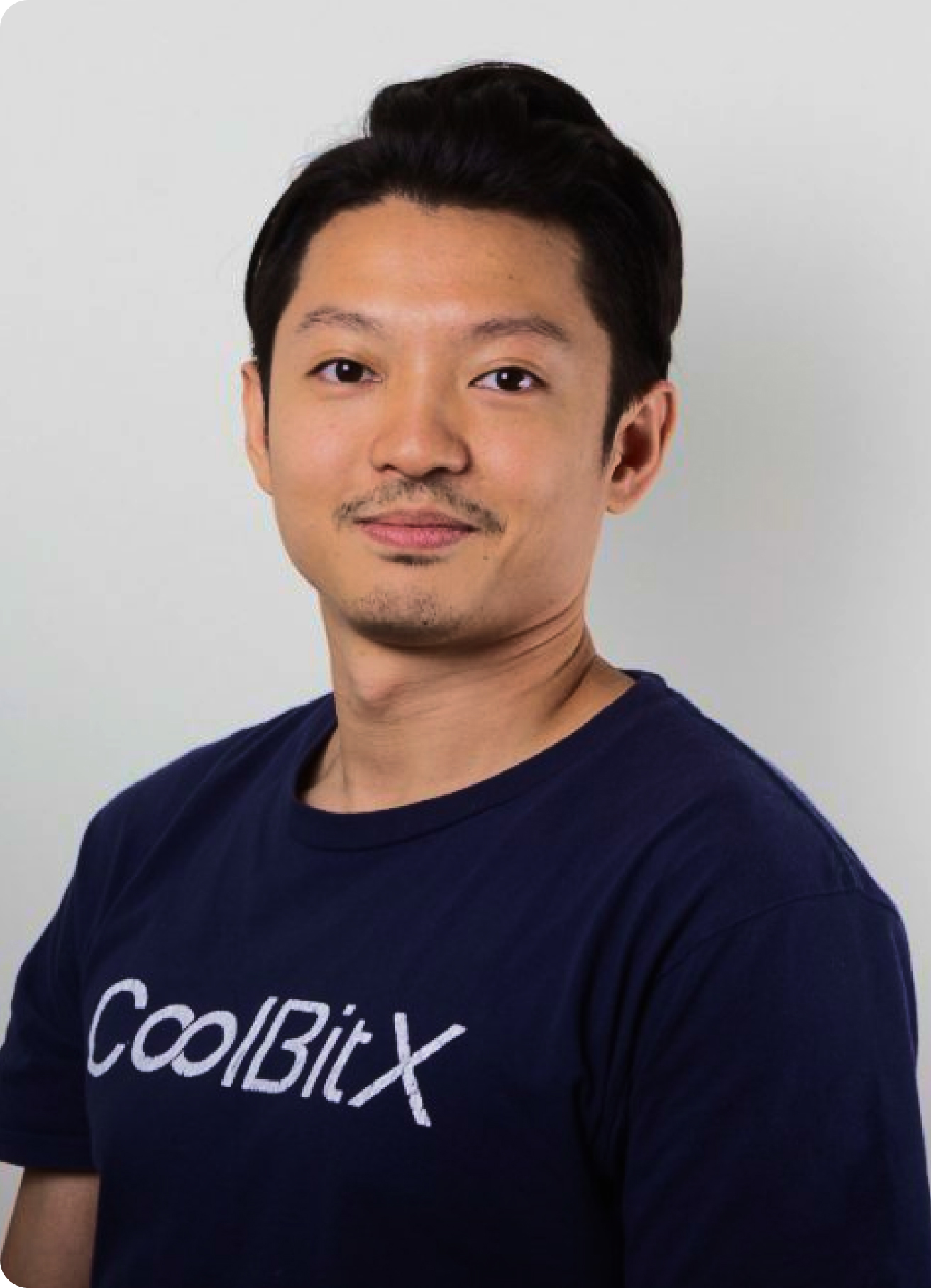
Michael Ou

Michael Ou

Founder · CoolBitX

“Security and precision are non-negotiable for us. They demonstrated solid technical judgment, were open to feedback from our engineers, and iterated quickly.”

CoolBitX case study→
John Bradford

John Bradford

CEO · PetScreening

“An external team can be just as committed and driven as our internal one. Their dedication and attention to detail have made them invaluable.”

PetScreening case study→
Oliver Dlouhy

Oliver Dlouhy

CEO · Kiwi

“We move fast and deal with a lot of edge cases. They kept up without cutting corners, which is rare. The team stayed responsive across time zones.”

Kiwi case study→
Davis Rosser

Davis Rosser

CEO & Co-founder · Elite Amenity

“The digital concierge we co-built is more than tech, it's a paradigm shift in resident experience. Luxury brands can now offer faster services.”

Elite Amenity case study→

Why Teams Choose Us

verified

SOC 2 Certified

Enterprise-grade security and compliance across every engagement.

schedule

Overlapping Hours

Senior engineers whose working hours overlap your US or UK day for live collaboration.

workspace_premium

Verified Reviews

Rated 4.9 on Clutch and 5.0 on Google by verified clients.

Process

How we deliver every sprint.

Our engineers are not freelancers, and we are not a marketplace. Dedicated Codieshub seniors, seated with your team.

Before kickoff

First-touch deep dive.

Pre-kickoff technical and strategic review.

Before a single line of code, we sit with your team to align on stack, constraints, and what success looks like. Our VP Eng, CTO, and senior leads join, not a sales engineer.

  1. Full review of your stack, goals, and constraints before kickoff

  2. Session led by VP Eng, CTO, and the senior leads who'll staff the work

  3. Architecture, tooling, and team shape agreed before the first sprint

Questions

Frequently asked, honestly answered.

The questions we get on every intro call, answered without the marketing gloss.

  1. The honest answer is that both frameworks now cover the same ground for most production use cases. TensorFlow (especially with Keras) has a slight edge when your deployment targets are diverse (mobile via TF Lite, edge devices via TF Lite Micro, and cloud serving via TF Serving) because the production tooling around those targets is more mature. PyTorch has a stronger ecosystem for research and for teams using Hugging Face Transformers, which are predominantly PyTorch-native. If you're building a computer vision system that needs to run on Android devices and a cloud API simultaneously, TensorFlow is the stronger choice. If you're fine-tuning a large language model, PyTorch is typically faster to work with. Codieshub works with both and will recommend based on your specific deployment constraints during scoping.

Keep exploring