Hire LLaMA Developer
Open-weight LLaMA 3 served on your infrastructure — vLLM, fine-tuning, quantization, and on-prem / VPC deployment so your data never leaves the perimeter.
vLLM, TGI, and Triton-based serving on your hardware or private VPC for full data control and cost predictability.
Parameter-efficient fine-tuning with LoRA / QLoRA on your domain data, including RLHF and DPO pipelines.
INT4/INT8 quantization, speculative decoding, and GPU optimization to cut inference costs by 4-10x.
Tool-use and function-calling agents on LLaMA 3 with structured output parsing and self-critique loops.
End-to-end open-source RAG: LLaMA 3 + open embeddings + Qdrant/Weaviate for air-gapped deployments.
HIPAA, SOC 2, and government deployments where data cannot leave your environment.
Meta's Llama model family has fundamentally changed the economics of deploying large language models. For the first time, enterprises can run state-of-the-art open-weight models inside their own infrastructure — no data leaves to a third-party API, no per-token cost accumulates at scale, and fine-tuning on proprietary data is genuinely feasible. But the gap between downloading a Llama checkpoint and running a production-grade, latency-consistent, cost-efficient inference stack is substantial. Codieshub engineers bridge that gap.
Our AI teams have worked with the full Llama lineage — from the original release through Llama 3.1 and 3.2 instruction-tuned and base variants — running inference on vLLM and llama.cpp backends, applying LoRA and QLoRA fine-tuning for domain-specific tasks, and integrating models into retrieval-augmented pipelines for healthcare documentation, fintech compliance, and SaaS product features. We understand the tradeoffs between quantization levels, context window management, and GPU memory footprint because we've navigated them on real production systems.
For companies evaluating whether to build on Llama versus a closed API, Codieshub offers direct technical guidance grounded in your specific latency SLAs, data sensitivity requirements, and budget. We've helped clients make that call in both directions — and we build whichever path is right for the business.
Teams that attempt Llama deployments without LLM infrastructure experience routinely hit the same wall: models that benchmark well on a single GPU become unpredictable under concurrent load, quantized variants introduce subtle quality regressions that appear only on domain-specific inputs, and fine-tuning runs that look promising in notebooks fail to generalize or overfit to training artifacts. Procurement and compliance teams often don't know how to evaluate open-weight model risk relative to closed APIs, creating organizational hesitation that delays shipping.
Codieshub structures Llama engagements around three distinct workstreams: inference infrastructure design (selecting the serving backend, quantization level, batching strategy, and hardware configuration for your throughput and latency targets), fine-tuning pipeline development (data curation, LoRA adapter training, evaluation harness, and model registry), and application integration (RAG pipeline wiring, prompt engineering, output parsing, and guardrail implementation). We run all three concurrently with separate specialist engineers rather than a generalist who context-switches between them.
Production Llama deployments from Codieshub are designed to target sub-500ms first-token latency for 7B and 13B parameter models under realistic concurrent load — the right hardware and serving configuration makes this achievable for most workloads. Self-hosted inference typically converts per-token API cost into fixed compute cost at significantly lower run-rate once query volume is sufficient; we model the break-even for your specific throughput before you commit. Fine-tuned adapters are evaluated against held-out domain benchmarks so quality uplift is measurable, not assumed. Teams leave with reproducible infrastructure-as-code, a documented model evaluation protocol, and the operational knowledge to iterate without Codieshub in the loop.
Talk to an AI infrastructure engineer about your use case — no sales cycle.
The Work
Archive · 2016 → 2026
Browse all 35 cases→
Healthcare
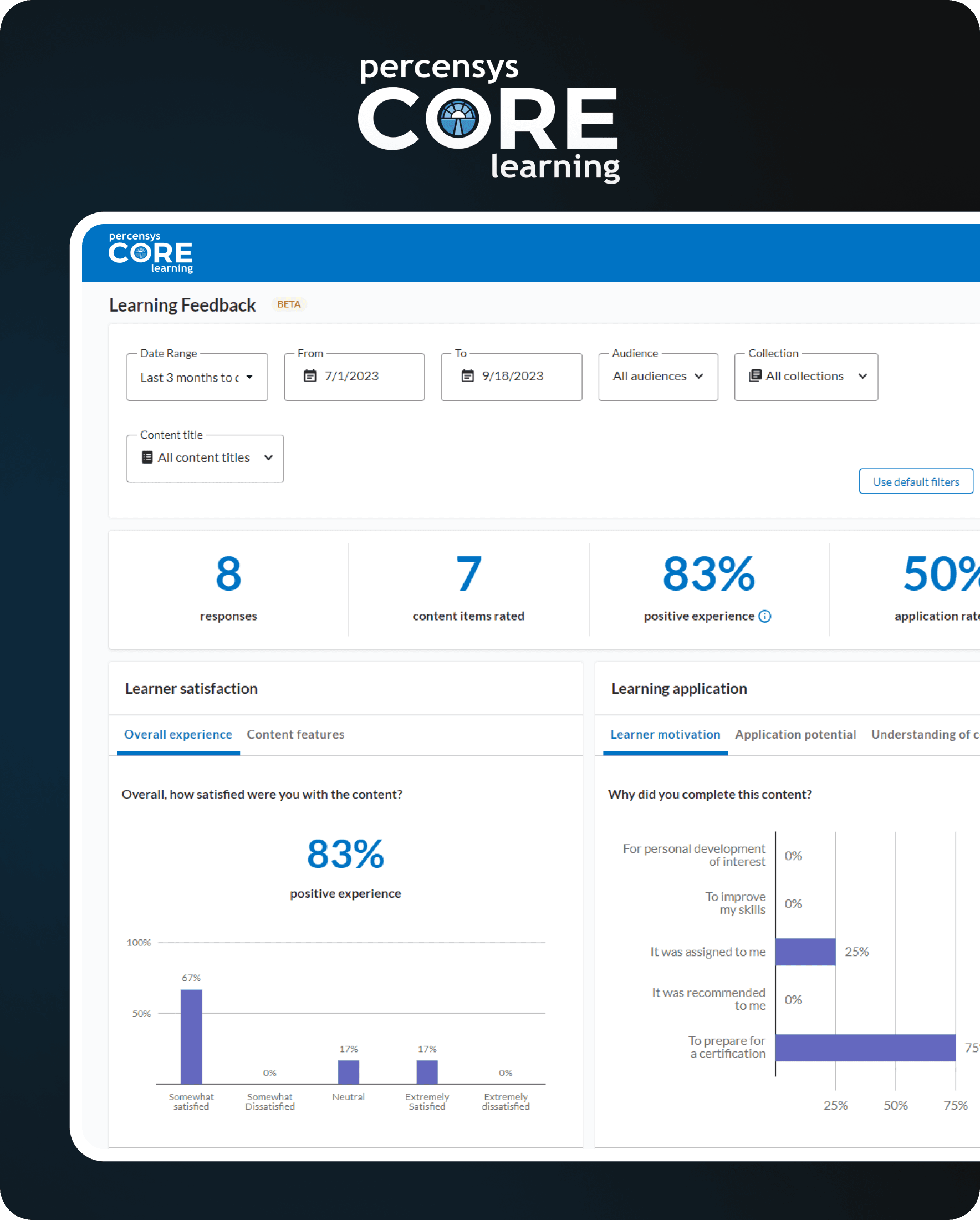
Healthcare SaaS for mPATH Health
Percensys Core Learning
Education
Learner & Admin Workflows for Percensys
Kapital Bank
Fintech
Fintech Web Platform for Kapital Bank
Paradigm Personality Labs
HR
HR SaaS for Paradigm Personality Labs
TeamBuilder
Healthcare
Healthcare SaaS for TeamBuilder
Eddy
Education
EdTech SaaS for Eddy
Rodeo
E-commerce
Shopify Subscription Plugin Built in 8 Weeks
Investment List
Fintech
Fintech Web Platform for Investor Discovery
Dot Drive
Fintech
Fintech Web Product for Dot Drive
4.9 / 5
Average client rating across platforms
93%
Net Promoter Score
150%
Client retention rate
SOC 2
Type II certified
Four ways to work with us — from surgical staff augmentation to fully managed delivery. All models share the same senior-first talent bench.
Full-time engineers embedded in your team for long-running engagements.
Explore Dedicated Teams↗Add senior specialists to an existing team — vetted, onboarded, and up to speed in weeks.
Explore Staff Augmentation↗Managed fixed-scope projects with a committed timeline and deliverables.
Explore Project Delivery↗Fractional senior technical leadership for architecture, hiring, and strategy.
Explore Virtual CTO↗Why Codieshub
The shortlist we get asked about on every call — what actually separates Codieshub from a dev shop.
Llama runs entirely within your cloud account or on-premise environment. No prompts, no completions, no fine-tuning data ever reach a third-party API endpoint. This is the default architecture — not an add-on, not a premium tier.
LoRA and QLoRA adapter training on your proprietary data with rigorous evaluation against held-out domain benchmarks. We include overfitting detection, catastrophic forgetting tests, and a model registry so you can roll back any adapter version in production.
vLLM continuous batching, tensor parallelism across multiple GPUs, GGUF quantization for CPU-feasible edge deployments, and speculative decoding for low-latency interactive applications. We select the combination that hits your SLA at minimum hardware cost.
Llama as the generation layer in retrieval-augmented systems: vector store selection (pgvector, Pinecone, Weaviate), chunk strategy, hybrid keyword-semantic retrieval, and citation grounding so outputs are traceable to source documents.
Open-weight models on your own infrastructure convert per-token API cost into fixed compute cost. We model your projected query volume against hardware configurations — spot GPU instances, reserved capacity, or on-premise — so you know the break-even point before committing.
Llama Guard integration, constitutional AI filtering, output schema validation, and PII redaction in the inference pipeline. Compliance teams get documented safety controls, not a black box.
Reviews

Farid Huseynov
CEO · Kapital Bank
Kapital Bank case study→“Reliability and scalability are critical for us. They approached the engagement with a strong technical foundation and a clear process.”

Vito Robles
COO · Percensys
Percensys case study→“They took feedback seriously, refined the details, and made sure our content and workflows were presented in a way that really works for our learners and admins.”

Lisa Dunbar
CEO · Paradigm Labs
Paradigm Labs case study→“They did an excellent job balancing scientific nuance with a user-friendly experience. It's clear they care about both rigor and design.”

Ryan Pamplin
CEO · Blendjet
Blendjet case study→“Managing global scale requires extreme technical precision. Codieshub re-architected our funnels to perform under massive pressure.”
Steve Gebhardt
Founder · RSVLTS
RSVLTS case study→“Our old setup crashed during every major drop until Codieshub built a beast of an engine for us. They handled our traffic spikes perfectly.”

Michael Ou
Founder · CoolBitX
CoolBitX case study→“Security and precision are non-negotiable for us. They demonstrated solid technical judgment, were open to feedback from our engineers, and iterated quickly.”

John Bradford
CEO · PetScreening
PetScreening case study→“An external team can be just as committed and driven as our internal one. Their dedication and attention to detail have made them invaluable.”

Oliver Dlouhy
CEO · Kiwi
Kiwi case study→“We move fast and deal with a lot of edge cases. They kept up without cutting corners, which is rare. The team stayed responsive across time zones.”

Davis Rosser
CEO & Co-founder · Elite Amenity
Elite Amenity case study→“The digital concierge we co-built is more than tech — it's a paradigm shift in resident experience. Luxury brands can now offer faster services.”
Enterprise-grade security and compliance across every engagement.
Nearshore teams that overlap with your working hours for real-time collaboration.
Near-perfect satisfaction scores across Clutch, DesignRush, and Manifest.
Process
Our engineers are not freelancers, and we are not a marketplace. Dedicated Codieshub seniors, seated with your team.
Before kickoff
Pre-kickoff technical and strategic review.
Before a single line of code, we sit with your team to align on stack, constraints, and what success looks like. Our VP Eng, CTO, and senior leads join — not a sales engineer.
Full review of your stack, goals, and constraints before kickoff
Session led by VP Eng, CTO, and the senior leads who'll staff the work
Architecture, tooling, and team shape agreed before the first sprint
Questions
The questions we get on every intro call — answered without the marketing gloss.
The right starting point depends on your task type, latency budget, and available hardware. For classification, extraction, and short-form generation on domain-specific text, Llama 3.1 8B fine-tuned often outperforms Llama 3.1 70B base — smaller models fine-tune more efficiently and run faster. For multi-step reasoning, summarization of long documents, or tasks requiring broad world knowledge, 70B is the more reliable starting point. For interactive user-facing features where first-token latency under 300ms is critical, we typically start with an 8B model on a single A100 or H100 and measure quality before scaling up. We run a structured evaluation sprint in the first two weeks of any engagement to make this decision on your actual data rather than synthetic benchmarks.
Keep exploring