
InsightsHealthcare
Speech Therapy Apps: Best AI-Powered Tools in 2026
Explore the best AI-powered speech therapy apps in 2026—clinical use cases, HIPAA compliance, tech stack, and build vs. buy guidance.
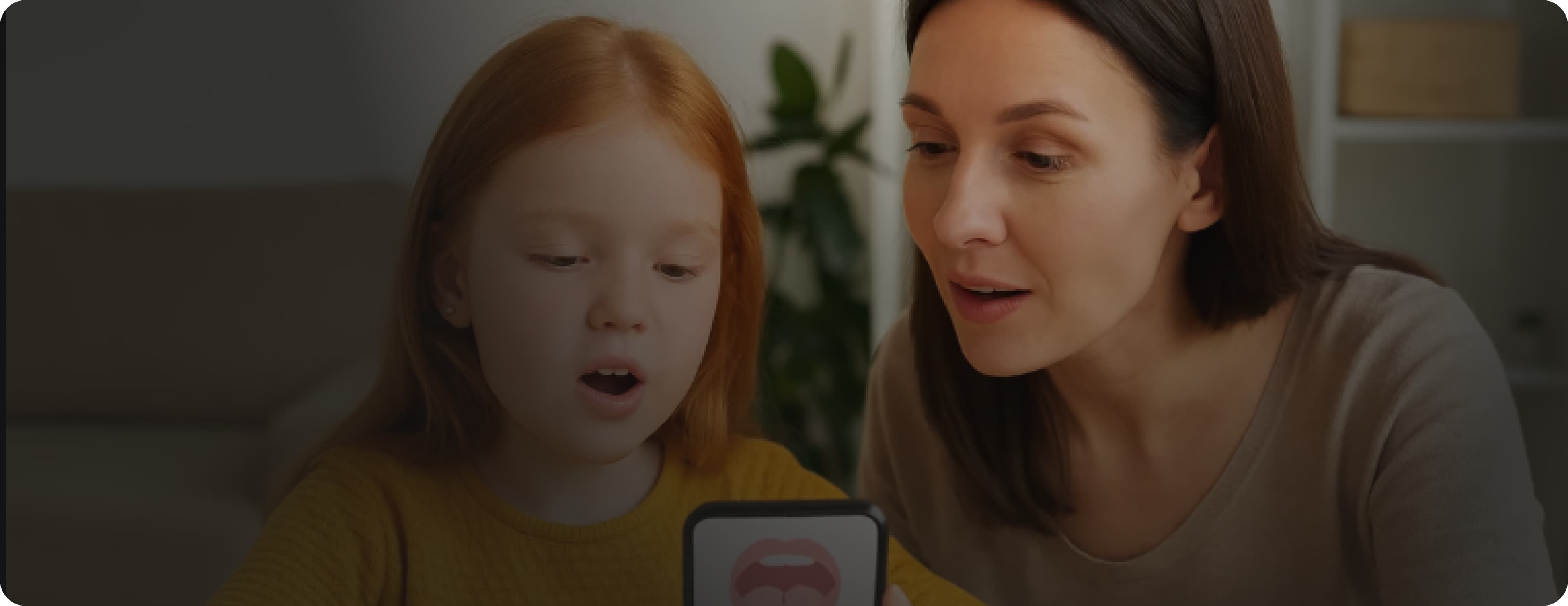
A child with a stutter sits across from a speech-language pathologist during their weekly session. For 45 minutes, they practice fluency techniques: controlled breathing, easy onset, light articulatory contact. The session ends. The child goes home. The next session is in seven days.
In between those sessions, the child has 10,000 speaking moments. Some will go well. Some will not. The SLP will hear about none of them.
This is the fundamental clinical challenge of speech therapy: the gap between what happens in the therapy room and what happens in the patient's actual communication world. Whether the patient is a child developing early language skills, a stroke survivor rebuilding speech after aphasia, a professional managing a stutter, or an adult with Parkinson's disease struggling with hypophonia, the quality of their daily practice between sessions is the primary determinant of their progress.
AI-powered speech therapy apps are closing this gap. They guide patients through evidence-based exercises between sessions, analyze speech patterns in real time using acoustic AI, track progress across practice sessions, alert therapists when patients are struggling or improving unexpectedly, and extend the therapeutic relationship into the 167 hours per week when the therapist is not present.
In 2026, AI speech therapy apps are transforming clinical practice across pediatric speech-language pathology, adult neurological rehabilitation, stuttering treatment, voice therapy, and augmentative and alternative communication, making therapy more accessible, more continuous, and more data-driven than the once-weekly clinic model has ever allowed.
This guide covers the best AI-powered speech therapy apps in 2026, what makes them clinically effective, what healthcare organizations and health tech companies need to know about building them, and the compliance requirements for technology operating in this clinical domain.
Key Takeaways
AI speech therapy apps use acoustic analysis, speech recognition, and machine learning to guide patients through exercises, assess speech quality in real time, track progress, and give therapists continuous clinical data between sessions
The highest-value clinical applications are pediatric articulation and language development, aphasia rehabilitation, stuttering and fluency treatment, voice therapy, and AAC support for non-verbal patients
Acoustic AI analyzing pitch, prosody, speech rate, fluency, and articulation accuracy from recorded speech is the core clinical differentiator of AI speech therapy apps over traditional paper-based home programs
HIPAA compliance is required; speech recordings, clinical assessments, and patient progress data are protected health information
FDA regulatory classification must be determined before development begins. AI tools that make therapeutic claims for specific clinical conditions may be regulated as Software as a Medical Device
EHR and practice management integration turns a standalone patient engagement tool into a clinical workflow component that SLPs will actually prescribe and use
Total development cost ranges from $70,000 for a focused MVP to $450,000 or more for a full AI-powered speech therapy platform
What Are AI Speech Therapy Apps?
AI speech therapy apps are digital health platforms that use artificial intelligence, acoustic analysis, automatic speech recognition, natural language processing, and machine learning to support speech-language pathology treatment by providing patients with guided practice, real-time feedback on speech quality, progress tracking, and therapist-facing clinical data between appointments.
Traditional speech therapy home programs face the same challenge as all home-based clinical practice: they are paper-based or static PDF documents that provide no feedback on whether exercises are being performed correctly, no mechanism for tracking adherence and progress, and no way for the therapist to know how the patient is doing between visits. A child working on /r/ articulation at home has no way to know if their production is accurate. A stroke survivor practicing word retrieval exercises has no immediate confirmation that their responses are correct. A person who stutters practicing fluency techniques has no objective measure of whether their fluency is improving.
AI speech therapy apps replace this static approach with an interactive clinical experience that extends evidence-based treatment into the patient's daily environment. Acoustic AI analyzes speech recordings in real time, assessing articulation accuracy, measuring fluency disruptions, analyzing voice quality parameters, or evaluating prosody and speech rate, and provides immediate, specific feedback that previously required a trained SLP to be present.
The clinical value is measurable in higher practice frequency, more accurate practice, faster progress, and continuous clinical data that gives therapists the information they need to optimize treatment plans between sessions rather than waiting for the next appointment to discover what has been happening.
Why Are AI Speech Therapy Apps Transforming Clinical Practice in 2026?
The Treatment Frequency Gap Is Clinically Significant
Speech-language pathology research consistently demonstrates that treatment frequency is a significant predictor of outcomes; patients who practice more frequently progress faster. The current model of one to two clinic sessions per week leaves most of the potential practice time unutilized. AI speech therapy apps that make high-quality, feedback-supported practice available every day close this frequency gap in ways that the clinic-based model structurally cannot.
Acoustic AI Has Reached Clinical Quality
The acoustic analysis capabilities available on consumer smartphones in 2026 are sufficient to detect the clinically meaningful speech features articulation accuracy, fluency disruptions, voice quality parameters, speech rate, and prosodic patterns that are the targets of speech therapy treatment. Technologies that required specialized laboratory equipment and trained acoustic analysts five years ago are now deployable on the devices that patients already carry.
Telepractice Has Expanded Access but Not Intensity
The expansion of speech telepractice live video sessions between SLP and patient has significantly improved access to speech-language pathology services for patients in underserved areas. But telepractice sessions are still once or twice weekly. AI speech therapy apps extend clinical intensity beyond session frequency, providing guided practice between telepractice sessions that improves outcomes for remote patients who cannot access in-person care.
Patient Populations Span Urgent Clinical Needs
The patient populations served by speech therapy apps include children during critical developmental windows where early intervention produces the best outcomes, stroke survivors in the acute and post-acute phases where neuroplasticity is highest, and adults with progressive neurological conditions where maintenance programs slow functional decline. For each of these populations, the gap between clinic visits represents clinical opportunity that current models consistently underutilize.
What Are the Key Clinical Use Cases for AI Speech Therapy Apps?
Pediatric Articulation and Phonological Development
The largest clinical population in speech-language pathology is children with speech sound disorders, difficulties producing specific speech sounds accurately. For these children, AI articulation apps provide the high-frequency, feedback-supported practice that accelerates phoneme acquisition.
AI articulation analysis uses acoustic models trained on child speech to assess whether target sounds are produced correctly, providing immediate feedback ("Great /r/ sound!" or "Try again, put your tongue a little further back") that guides children through practice without requiring a therapist present for each repetition.
For pediatric articulation apps specifically, the user experience design must address the reality that the patient is a child; the interface must be engaging, appropriately challenging, and motivating in ways that sustain practice frequency across the weeks and months that articulation treatment typically requires.
Aphasia Rehabilitation
Aphasia, the language disorder that follows stroke or brain injury, affects approximately 180,000 Americans annually and is among the most devastating acquired communication disorders. Evidence-based aphasia treatment requires high-intensity practice. Research consistently shows that more treatment hours produce better outcomes, but the healthcare system rarely provides the treatment intensity that the evidence recommends.
AI aphasia therapy apps provide word retrieval, naming, sentence production, reading, and comprehension exercises with real-time accuracy feedback. For expressive aphasia where the patient's speech output is impaired, AI acoustic analysis provides feedback on the accuracy of attempted word productions. For comprehension impairments, AI-guided exercises present stimuli and track response accuracy automatically.
The intensity that AI aphasia apps enable daily practice for 30 to 60 minutes rather than one clinic session per week is clinically transformative for patients in the critical post-stroke recovery window where neuroplasticity is highest.
Stuttering and Fluency Treatment
Stuttering treatment requires helping patients develop fluency techniques: controlled rate, easy onset, light articulatory contact, diaphragmatic breathing, and then transfer these techniques from the clinical environment to real communication situations. This transfer is the hardest part of stuttering treatment, and it requires practice in real communication contexts that clinic sessions cannot fully replicate.
AI stuttering apps analyze speech recordings for fluency disruptions, repetitions, prolongations, and blocks and provide objective feedback on fluency that supplements therapist assessment. Apps that guide users through fluency technique practice and analyze technique quality in real time provide the frequent, feedback-supported practice that technique transfer requires.
For stuttering apps specifically, the clinical and ethical dimensions of app design are important; the goal is effective communication and improved quality of life, not the elimination of all disfluency, and app design must reflect current evidence-based and client-centered approaches to stuttering treatment.
Voice Therapy
Voice disorders, including vocal nodules, laryngeal pathology, functional voice disorders, and neurological voice disorders, require patients to practice specific vocal behaviors and eliminate harmful vocal habits across their entire daily communication. Voice therapy apps guide patients through resonant voice exercises, semi-occluded vocal tract exercises, pitch and loudness training, and vocal hygiene programs.
AI acoustic analysis measures the voice parameters that are the targets of voice therapy: fundamental frequency, vocal intensity, jitter, shimmer, and voice quality measures, providing objective feedback on vocal quality that supplements perceptual assessment by the treating SLP.
For voice therapy apps serving patients with vocal hygiene programs, passive voice use monitoring, tracking speaking time, loudness levels, and vocal strain patterns throughout the day provides the objective data that clinicians need to identify vocal overuse patterns and counsel patients on behavior change.
Motor Speech Disorders: Dysarthria and Apraxia
Dysarthria and apraxia of speech are motor speech disorders resulting from neurological conditions including stroke, Parkinson's disease, ALS, and traumatic brain injury, and require intensive practice of speech motor patterns that apps can support between clinic sessions.
For Parkinson's disease specifically, the Lee Silverman Voice Treatment (LSVT LOUD) protocol targeting vocal loudness as the primary treatment target has been extensively studied and has robust evidence supporting its efficacy. AI LSVT companion apps that guide patients through LSVT exercises and provide acoustic feedback on vocal loudness extend treatment intensity beyond the intensive clinic-based protocol.
Language Development in Early Childhood
Early language intervention supporting language development in toddlers and preschoolers with language delays benefits from parent coaching apps that guide parents through language facilitation strategies during daily routines. AI-powered parent coaching apps provide video analysis of parent-child interactions, identify opportunities for language facilitation, and deliver in-the-moment guidance that helps parents implement evidence-based language strategies throughout the child's day.
Augmentative and Alternative Communication Support
For non-verbal patients or patients with severe communication impairments who use AAC symbol-based communication systems, speech-generating devices, and AI apps support vocabulary learning, symbol navigation training, and communication partner coaching.
AI-powered AAC apps that learn individual user vocabulary preferences, predict intended messages from partial selections, and adapt symbol organization based on individual usage patterns make AAC systems more efficient and more accessible for users across the severity spectrum.
Accent Modification
For adults seeking to modify their accent for professional or personal communication goals, AI acoustic analysis apps provide objective feedback on pronunciation accuracy across the phoneme inventory, prosodic patterns, and connected speech features that distinguish the target accent from the speaker's native patterns.
What Are the Best AI-Powered Speech Therapy Apps in 2026?
For Pediatric Articulation: Articulation Station Pro
Articulation Station Pro is a widely used clinical articulation app that provides structured articulation practice across the full phoneme inventory with therapist-assignable target sounds and progress tracking. While not primarily AI-driven in its core exercise delivery, it integrates with therapist dashboards and provides the structured practice framework that articulation therapy requires. Best for SLPs managing large pediatric articulation caseloads who need a structured home practice tool with therapist visibility.
For Aphasia: Constant Therapy
Constant Therapy is one of the most clinically validated digital aphasia therapy platforms, providing a comprehensive library of speech, language, and cognitive exercises with adaptive difficulty that adjusts to patient performance. Built with significant clinical input from aphasia researchers at Boston University, Constant Therapy has published clinical evidence demonstrating outcomes comparable to in-person therapy at a fraction of the cost. The platform includes a therapist portal with detailed patient performance analytics.
For Stuttering: SpeechEasy and Stamurai
SpeechEasy is an electronic fluency device app that uses altered auditory feedback, playing back the user's voice with a slight delay and frequency shift to reduce stuttering severity in real-time communication. Stamurai is an AI-powered stuttering treatment app that guides users through stuttering therapy techniques including easy onset, light articulatory contact, and voluntary stuttering, with AI speech analysis providing feedback on technique quality.
For Voice Therapy: LSVT Companion and VocaLive
LSVT Companion is the companion app for the Lee Silverman Voice Treatment LOUD protocol, the most evidence-based voice treatment for Parkinson's disease. It guides users through LSVT exercises and provides acoustic feedback on vocal loudness. VocaLive provides professional voice analysis tools including pitch visualization, resonance analysis, and recording capabilities that support voice therapy practice and therapist documentation.
For Motor Speech: Speech Pathology AI Platforms
Several enterprise platforms targeting hospital-based speech therapy departments are emerging in 2026, providing AI-guided dysarthria practice, apraxia treatment programs, and integration with EHR systems. These platforms are more commonly custom-built for specific institutional requirements than available as off-the-shelf products.
For AAC: Proloquo2Go and TouchChat
Proloquo2Go and TouchChat are the market-leading AAC apps for iOS and Android, respectively, providing symbol-based communication systems for non-verbal and minimally verbal users. Both platforms have incorporated AI features including predictive vocabulary, usage analytics for vocabulary optimization, and smart suggestions based on communication history.
For Language Development: Babble and Language Builder
Babble provides AI-powered early language intervention support — guiding parents through language facilitation strategies during play and daily routines with AI feedback on interaction quality. Language Builder provides visual scene-based language learning exercises for children with autism and language delays.
What Features Make an AI Speech Therapy App Clinically Effective?
Acoustic AI for Real-Time Speech Analysis
The clinical differentiator of AI speech therapy apps is acoustic analysis using the smartphone microphone to analyze speech recordings and provide real-time feedback on clinically relevant speech features. The specific acoustic parameters analyzed depend on the clinical application.
For articulation apps, acoustic models assess phoneme production accuracy by detecting correct versus incorrect productions of target sounds. For fluency apps, acoustic analysis detects disfluency events, repetitions, prolongations, and blocks, and measures speech rate and fluency percentage. For voice apps, acoustic analysis measures fundamental frequency, vocal intensity, jitter, shimmer, and voice quality parameters.
The accuracy of acoustic AI is the primary clinical quality determinant; analysis that does not reliably detect the clinical features it is targeting provides misleading feedback that can interfere with rather than support treatment.
Our AI and ML solutions team builds speech acoustic analysis models with clinical, population-specific training on child speech, elderly speaker speech, and disordered speech that general-purpose speech recognition models do not provide for speech therapy applications.
Evidence-Based Exercise Content
The exercises in a speech therapy app must be grounded in the clinical evidence base for the target condition and patient population. Articulation exercises should follow established articulation therapy hierarchies. Aphasia exercises should reflect current evidence on treatment intensity and task selection. Fluency exercises should align with established stuttering treatment approaches.
Clinical content development requires input from licensed speech-language pathologists with expertise in the target clinical area not just clinical review of technically developed content, but clinical co-development that ensures the exercise hierarchy, difficulty progression, and feedback design reflect how evidence-based SLPs actually treat these conditions.
Therapist Dashboard With Clinical Analytics
A therapist-facing dashboard showing patient practice frequency, exercise accuracy by target, acoustic measure trends, and clinician-assigned program status, giving SLPs the continuous clinical data they need to monitor patient progress, adjust programs remotely, and identify patients who need additional support before the next scheduled session.
The therapist dashboard is what distinguishes a clinical tool from a consumer wellness app. SLPs prescribe apps that improve their clinical workflows and patient outcomes, not apps that operate independently of the therapeutic relationship.
Our healthcare UI/UX design team designs SLP therapist dashboards tested with real speech-language pathologists in realistic clinical caseload management scenarios.
Practice Management Integration
Integration with speech therapy practice management systems WebPT, Jane App, Clinicient that enables exercise program assignment from the patient's clinical record, progress documentation export to the patient record, and outcome measure score transfer. Practice management integration makes the app a clinical workflow component rather than a parallel system.
Our EHR and EMR integration practice builds HL7 FHIR-based integrations that connect speech therapy apps to clinical systems with bidirectional data exchange that supports documentation and billing workflows.
Patient Engagement and Motivation Design
Adherence to home practice programs in speech therapy, as in all rehabilitation, is the primary behavioral challenge. App design must address the motivational requirements of sustained daily practice across weeks or months of treatment.
For pediatric apps, gamification is essential; children practice more consistently when exercises are presented as games with rewards, achievements, and progress visualization that maintains engagement. For adult apps, progress visualization, practice streak tracking, and therapist acknowledgment of practice achievements sustain motivation without the game mechanics that may feel inappropriate for adult clinical populations.
Secure Messaging Between Patient and Therapist
A HIPAA-compliant messaging channel that enables patients to send recordings of concerning speech events, ask questions between sessions, and receive therapist feedback without scheduling a formal visit. For patients in intensive phases of treatment post-stroke aphasia rehabilitation and LSVT treatment for Parkinson's, asynchronous clinical communication significantly improves treatment intensity.
HIPAA-Compliant Audio and Data Handling
Speech recordings captured during therapy practice are protected health information. Every component of the app that captures, processes, stores, or transmits speech audio must comply with HIPAA.
On-device audio processing analyzing speech audio locally without transmitting recordings to cloud servers is preferable for privacy and is increasingly feasible as smartphone computational power increases. Where audio must be transmitted for cloud-based analysis, encrypted transmission and HIPAA-compliant storage are required.
Our HIPAA-compliant software development practice builds the compliance architecture, including audio data encryption, access controls, and retention management appropriate for speech therapy apps that capture sensitive patient recordings.
How Do You Build an AI Speech Therapy App? A Step-by-Step
Step 1: Define the Clinical Scope and Target Population
Building an AI speech therapy app begins with defining the specific clinical application articulation, fluency, aphasia, voice, motor speech, AAC, or language development and the target patient population. Each clinical application has different acoustic analysis requirements, different exercise content needs, different user experience requirements for the specific patient population, and different regulatory implications.
A pediatric articulation app for children ages three to eight has fundamentally different design requirements than an aphasia rehabilitation app for post-stroke adults or a voice therapy app for adults with vocal pathology. Define the clinical scope precisely before beginning technical development.
Step 2: Determine FDA Regulatory Classification
Before any development begins, determine whether the AI speech therapy app requires FDA clearance as a Software as a Medical Device. AI apps that make therapeutic claims for specific clinical conditions, claiming to treat stuttering, rehabilitate aphasia, or improve voice disorders, are more likely to be regulated as SaMD than apps that provide general practice support tools.
Consult regulatory counsel based on the specific intended use claims. The FDA's Software as a Medical Device framework and the Digital Health Center of Excellence's guidance on the distinction between wellness apps and medical devices provide the regulatory framework for this determination.
Our MVP and product strategy process addresses FDA regulatory classification as a core discovery phase component for speech therapy app development.
Step 3: Build the Acoustic Analysis Engine
The acoustic analysis engine is the most technically demanding component of an AI speech therapy app. Development includes selecting and fine-tuning the acoustic models for the target clinical application.
For articulation apps, acoustic models assess phoneme production accuracy, trained on large datasets of correct and incorrect productions of target phonemes by speakers from the target age group. For fluency apps, acoustic analysis detects disfluency events trained on annotated fluent and disfluent speech samples. For voice apps, acoustic feature extraction measures the voice quality parameters relevant to the target voice disorder.
General-purpose speech recognition models designed for transcription accuracy perform poorly on the clinical acoustic features that speech therapy apps require. Domain-specific model development with clinical population training data is required.
Validate acoustic analysis accuracy against expert SLP assessment demonstrating that the app's analysis produces results that are clinically equivalent to trained clinician judgment for the acoustic features it targets.
Step 4: Develop Clinical Content With SLP Collaboration
Develop the exercise library with evidence-based exercise hierarchies, stimulus materials, difficulty progression criteria, and feedback design in collaboration with licensed speech-language pathologists who have clinical expertise in the target condition.
Clinical content must reflect current evidence-based practice; articulation hierarchies should follow established phonological approaches; aphasia exercises should reflect current evidence on treatment intensity and task selection; stuttering exercises should align with established fluency treatment protocols.
Step 5: Build the Patient Mobile Application
Build the patient-facing mobile application designed specifically for the target patient population. For pediatric apps, design for child engagement with age-appropriate game mechanics and visual design. For adult neurological rehabilitation apps, design for the cognitive and motor limitations that may affect patients with aphasia, dysarthria, or Parkinson's disease.
Test the patient application with real patients from the target population, including patients in the specific clinical stages the app is designed to serve, before finalizing the design.
Our healthcare mobile app development team builds speech therapy patient apps with the clinical, population-specific usability testing that identifies accessibility barriers before deployment.
Step 6: Build the Therapist Dashboard
Build the SLP-facing therapist dashboard showing patient practice frequency, acoustic measure trends, exercise accuracy by target, program completion status, and clinician-assigned home program configuration. Design for clinical efficiency: SLPs managing large caseloads need to quickly identify patients who need attention across their entire patient panel.
Step 7: Build Practice Management Integration
Build integration with the practice management systems used by the target clinical market, enabling exercise program assignment from clinical records, progress documentation, and outcome measure transfer.
Our API integration services team builds practice management system integrations that make the app a clinical workflow component rather than a standalone tool.
Step 8: Implement HIPAA Compliance Architecture
Implement the full HIPAA compliance architecture: encryption for all patient data including audio recordings, role-based access controls for clinical team roles, comprehensive audit logging, and Business Associate Agreements with all third-party services.
For speech apps that capture audio recordings, develop and implement audio data retention policies retaining recordings only as long as clinically necessary and technically enforcing retention limits rather than relying on policy documents alone.
Step 9: Conduct Clinical Validation
Conduct acoustic analysis validation against expert SLP assessment. Conduct adherence and outcome studies comparing patient progress with and without the AI app. Clinical validation evidence is essential for SLP adoption. Evidence-based practice is a core professional value in speech-language pathology, and clinicians who are asked to prescribe an app will ask for the evidence supporting it.
Step 10: Pilot With Speech Therapy Practices
Deploy in a structured clinical pilot with speech therapy practices measuring patient adherence rates, practice session quality metrics, and clinical outcomes. Use pilot data to refine acoustic models, exercise content, and therapist workflow integration.
Our DevOps and cloud solutions team builds the deployment infrastructure, acoustic model monitoring, and performance analytics that keep the speech therapy app clinically accurate over time.
What Technology Stack Is Used for AI Speech Therapy Apps?
Acoustic Analysis and Speech Processing
The acoustic analysis stack for speech therapy apps requires careful selection based on the clinical target and patient population.
For speech recognition as a foundation for accuracy assessment, detecting which phonemes were produced and which words were attempted, fine-tuned versions of Whisper or wav2vec 2.0 provide strong starting points that require clinical population-specific fine-tuning on child speech, elderly speaker speech, or disordered speech samples.
For clinical acoustic feature extraction fundamental frequency, jitter, shimmer, voice quality measures, speech rate, and fluency measurement librosa provides the core audio processing library, with custom feature extraction algorithms built on top for the specific acoustic features relevant to each clinical application.
For on-device inference enabling real-time acoustic analysis without transmitting audio to cloud servers, Core ML on iOS and TensorFlow Lite on Android provide the model serving infrastructure. On-device inference is preferred for speech therapy apps for both privacy and latency reasons.
PyTorch is the primary deep learning framework for speech model development. Hugging Face provides pre-trained model checkpoints for wav2vec 2.0, Whisper, and other speech foundation models that serve as starting points for clinical fine-tuning.
Mobile Application
React Native for cross-platform iOS and Android deployment for most speech therapy app use cases. For apps requiring the highest acoustic processing performance, where React Native bridge overhead affects real-time analysis, platform-native development enables direct access to Core ML and TensorFlow Lite without bridge overhead.
WebRTC for real-time audio capture with the low latency required for immediate feedback on speech production. AVFoundation on iOS and AudioRecord on Android for high-quality audio capture appropriate for acoustic analysis.
Backend Infrastructure
Python with FastAPI for the API layer. PostgreSQL for structured patient and exercise data. AWS S3 with HIPAA-eligible configuration and server-side encryption for audio recording storage where cloud storage is required. TimescaleDB for time-series acoustic measure trend data. Redis for real-time session management and therapist dashboard caching.
EHR and Practice Management Integration
HL7 FHIR R4 for EHR integration: CarePlan for exercise program data, Observation for acoustic measure scores and exercise completion, QuestionnaireResponse for patient-reported outcomes. Practice management system REST APIs for WebPT, Jane App, Clinicient, and other major speech therapy practice platforms.
Cloud Infrastructure
AWS with HIPAA Business Associate Agreement. On-device processing reduces cloud audio storage requirements significantly. Amazon RDS for patient and exercise data. AWS SageMaker for acoustic model training where cloud-based training is used. AWS CloudTrail for HIPAA audit logging.
What Are the HIPAA Compliance Requirements for Speech Therapy Apps?
Speech recordings captured during therapy practice sessions are protected health information; they contain the patient's voice linked to their clinical identity and clinical record. HIPAA compliance for speech therapy apps requires specific attention to audio data handling beyond standard PHI management.
Audio Data as PHI
Speech recordings are PHI in the same way that clinical photographs and video recordings are PHI; they are biometric data linked to an identified patient's clinical record. HIPAA requires encrypted storage, restricted access limited to the treating clinician and authorized clinical staff, retention policies that do not retain recordings beyond their clinical purpose, and audit logging of all audio data access.
On-device acoustic analysis that extracts clinical features without retaining the raw audio recording significantly reduces PHI handling burden; the extracted acoustic features (fundamental frequency values, fluency percentages, phoneme accuracy scores) are less sensitive than raw audio recordings and easier to manage under HIPAA.
Pediatric Privacy Considerations
For speech therapy apps serving pediatric patients, COPPA (Children's Online Privacy Protection Act) imposes additional requirements beyond HIPAA for apps directed at children under 13, including verifiable parental consent for data collection, specific data minimization requirements, and restrictions on data use and disclosure. Speech therapy apps serving pediatric populations must address both HIPAA and COPPA compliance.
State SLP Licensure and Telepractice Regulations
AI speech therapy apps that enable SLPs to supervise remote practice or conduct asynchronous clinical review of patient recordings may intersect with state speech-language pathology licensure requirements for telepractice. SLPs practicing through technology platforms must comply with the telepractice regulations of the state where the patient is located. Building compliance guidance into the platform, alerting SLPs to potential telepractice licensure considerations, supports responsible clinical use.
What Is the Speech Therapy App Development Checklist?
Clinical and Regulatory Foundation
Clinical scope and target patient population defined precisely
FDA regulatory classification determined before development
COPPA compliance assessed for pediatric applications
State telepractice licensure implications identified
Acoustic Analysis
Acoustic model selected and fine-tuned for target clinical application
Training data assembled from clinical population child speech, disordered speech, elderly speakers
On-device versus cloud inference architecture determined
Accuracy validated against expert SLP assessment
Real-time feedback quality tested with representative patient population
Clinical Content
Exercise library developed with licensed SLP clinical co-development
Evidence base for each exercise type documented
Difficulty progression criteria defined clinically
Contraindications and clinical precautions integrated
Integration
Practice management system integration built and validated
EHR integration built using HL7 FHIR where applicable
Outcome measure administration and scoring implemented
Secure patient-therapist messaging built
HIPAA and Privacy Compliance
Audio data PHI handling architecture designed on-device versus cloud
COPPA compliance implemented for pediatric applications
Encryption implemented for all PHI, including audio data
Role-based access controls implemented
Audio retention policy implemented technically
BAAs in place with all third-party services
Clinical Validation
Acoustic analysis accuracy validated against expert SLP assessment
Adherence study protocol designed
Outcome study protocol designed
Pilot deployment protocol with clinical metrics defined
What Are the Common Mistakes to Avoid When Building Speech Therapy Apps?
1. Building Acoustic Analysis Without Clinical Population Training Data
General-purpose speech recognition models are trained on adult, non-disordered speech from acoustically clean environments. They perform poorly on child speech, elderly speaker speech, and disordered speech the exact populations that speech therapy apps serve. Acoustic AI for speech therapy requires training data from the specific clinical population: children producing articulation errors, adults with aphasia attempting word productions, speakers who stutter to achieve the accuracy required for clinical feedback.
2. Clinical Content Development Without SLP Co-Development
Speech therapy exercises developed by product teams without clinical co-development from licensed SLPs produce content that may be technically functional but clinically inappropriate, including incorrect exercise hierarchies, inaccurate feedback criteria, missing clinical precautions, or treatment approaches that do not reflect current evidence. All clinical content must be co-developed with licensed SLPs who have expertise in the target clinical area.
3. Designing for Typical Adults When the Patient Is a Child
Pediatric speech therapy apps that are designed for adult usability standards will not be used consistently by children. The interface, the exercise presentation format, the reward systems, and the feedback design must all be appropriate for the specific developmental age range of the target patient population and must be tested with real children from that age range.
4. No SLP Dashboard Integration
An AI speech therapy app without a meaningful SLP therapist dashboard operates outside the clinical relationship, which means SLPs will not prescribe it consistently and patients will not use it as part of their clinical treatment. The therapist dashboard is what converts a consumer wellness tool into a clinical product that enters the therapeutic workflow.
5. Treating HIPAA as Optional for Apps With Audio Recordings
Speech recordings of patients are highly sensitive PHI. Apps that capture clinical speech recordings without HIPAA-compliant data architecture are not suitable for clinical deployment regardless of their acoustic analysis quality. Audio PHI handling, including on-device processing, encrypted transmission, access controls, and retention management, must be addressed from the beginning of development.
6. No Clinical Validation Evidence
Speech-language pathologists are evidence-based practitioners who make prescribing decisions based on clinical evidence. An AI speech therapy app without published or in-house evidence demonstrating improved adherence, improved acoustic outcomes, or clinical outcomes comparable to clinic-based care will face adoption barriers that are difficult to overcome with marketing alone. Clinical validation is not optional for sustained clinical adoption.
How Does Codieshub Build AI Speech Therapy Apps?
At Codieshub, we build AI speech therapy apps for speech-language pathology practices, academic medical centers, digital health companies, and health tech startups that need clinical-grade applications with the acoustic analysis accuracy, evidence-based clinical content, SLP workflow integration, and HIPAA compliance that clinical speech therapy demands.
Every engagement begins with our MVP and product strategy process which addresses clinical scope definition, FDA regulatory classification, acoustic model architecture selection, clinical content co-development process design, EHR integration approach, HIPAA compliance for audio data, and COPPA compliance for pediatric applications before production code is written.
Our AI and ML solutions team builds speech-language pathology acoustic analysis models for articulation accuracy assessment, fluency analysis, voice quality measurement, and motor speech evaluation with clinical population-specific training data, SLP assessment validation, and on-device inference architecture that protects patient audio privacy while enabling real-time feedback.
Our healthcare mobile app development team builds speech therapy patient apps tested with real patients from the target clinical population, including pediatric patients, patients with aphasia, and patients with motor speech disorders. Our healthcare UI/UX design team designs SLP therapist dashboards tested with real speech-language pathologists in realistic clinical caseload management conditions.
Our EHR and EMR integration team builds HL7 FHIR-based integrations with speech therapy practice management systems. Our API integration services team builds connections to WebPT, Jane App, and other major SLP practice platforms. Our HIPAA-compliant software development practice ensures full compliance, including audio data PHI management and pediatric COPPA requirements. Our DevOps and cloud solutions team builds the deployment infrastructure and acoustic model monitoring that keeps the speech therapy app clinically accurate over time.
Conclusion
The gap between what speech therapy achieves in the clinic and what it achieves in the patient's daily communication world, where 95% of speaking moments occur, is where most speech therapy outcomes are ultimately determined. AI-powered speech therapy apps close this gap in ways that the clinic-based model cannot. They bring acoustic analysis, evidence-based exercise guidance, and progress tracking into the patient's daily practice, extending the therapeutic relationship from one weekly session to continuous clinical support.
The best AI speech therapy apps in 2026 share common characteristics: acoustic analysis validated against expert SLP assessment, clinical content co-developed with licensed clinicians, therapist dashboards that give SLPs meaningful clinical data between sessions, and patient experience design that sustains practice frequency across the full treatment episode. These are the characteristics that distinguish clinical tools from consumer wellness apps, and they are the characteristics that drive SLP adoption and patient outcomes.
Building an AI speech therapy app that speech-language pathologists will prescribe and patients will use requires clinical co-development from the beginning, not just clinical review after the product is built. The acoustic analysis models, the exercise hierarchies, the feedback design, and the clinical workflows must all reflect how evidence-based SLPs actually treat these conditions in clinical practice.
At Codieshub, we build AI speech therapy apps for practices and health tech companies that understand the clinical standards their product must meet, with the acoustic AI expertise, evidence-based clinical content development process, SLP workflow integration, and HIPAA compliance architecture that building in this domain requires.
Ready to build an AI speech therapy app that SLPs will prescribe and patients will actually use? Schedule a Discovery Call. Tell us about your clinical scope and target patient population, and we will send you a tailored development and compliance game plan within 48 hours.
Frequently Asked Questions
1. What are AI speech therapy apps?
AI speech therapy apps use acoustic analysis, speech recognition, and machine learning to guide patients through prescribed exercises, assessing pronunciation, fluency, or voice quality in real time. They deliver immediate feedback, track progress across sessions, and give therapists continuous clinical data, extending treatment beyond the clinic into daily practice.
2. How does acoustic AI work in speech therapy apps?
Acoustic AI captures speech through the smartphone microphone and applies clinically trained models to analyze specific features, such as phoneme accuracy for articulation, disfluency events for fluency, or pitch and vocal intensity for voice disorders. These measurements generate real-time, targeted feedback that supports evidence-based treatment between therapy sessions.
3. Do AI speech therapy apps need HIPAA compliance?
Yes. Speech recordings, clinical assessments, and progress data collected during practice sessions are protected health information under HIPAA. Apps connecting patients with licensed SLPs must implement encrypted audio storage, role-based access controls, comprehensive audit logging, and Business Associate Agreements with every third-party service handling patient data.
4. Do speech therapy apps need FDA clearance?
It depends on intended use. Apps offering general practice support without specific therapeutic claims may fall outside FDA jurisdiction. However, apps claiming to treat particular speech disorders or provide diagnostic assessment may be regulated as Software as a Medical Device, making regulatory counsel review essential before development begins.
5. What makes an AI speech therapy app clinically effective?
Clinical effectiveness comes from accurate acoustic analysis that reliably detects targeted speech features, evidence-based content co-developed with licensed SLPs, a therapist dashboard delivering meaningful clinical data between sessions, and engaging patient design that sustains practice frequency. Engagement without accurate feedback is clinically counterproductive.
6. How do speech therapy apps integrate with SLP practice management systems?
Speech therapy apps integrate with platforms like WebPT, Jane App, and Clinicient through REST APIs and HL7 FHIR where supported. This enables exercise assignment from clinical records, automated progress notes from adherence data, and outcome score transfer for billing, turning a standalone app into a real clinical workflow tool.
7. How long does it take to build an AI speech therapy app?
A basic exercise-tracking app without AI takes three to six months. A mid-level app with acoustic analysis and a therapist dashboard takes six to twelve months. A full AI platform with multi-condition analysis, EHR integration, and FDA preparation takes twelve to twenty-four months, depending on complexity.
8. How much does an AI speech therapy app cost to build?
A basic app costs $70,000 to $120,000. A mid-level AI app with acoustic analysis and an SLP dashboard costs $120,000 to $250,000. A full platform costs $250,000 to $450,000 or more, with annual maintenance around $35,000 to $90,000, driven by acoustic model and clinical content development.