
InsightsHealthcare
Hospital Safety and Security AI Software: Complete Guide 2026
Discover how hospital safety and security AI software detects threats, prevents violence, and protects patients in 2026.
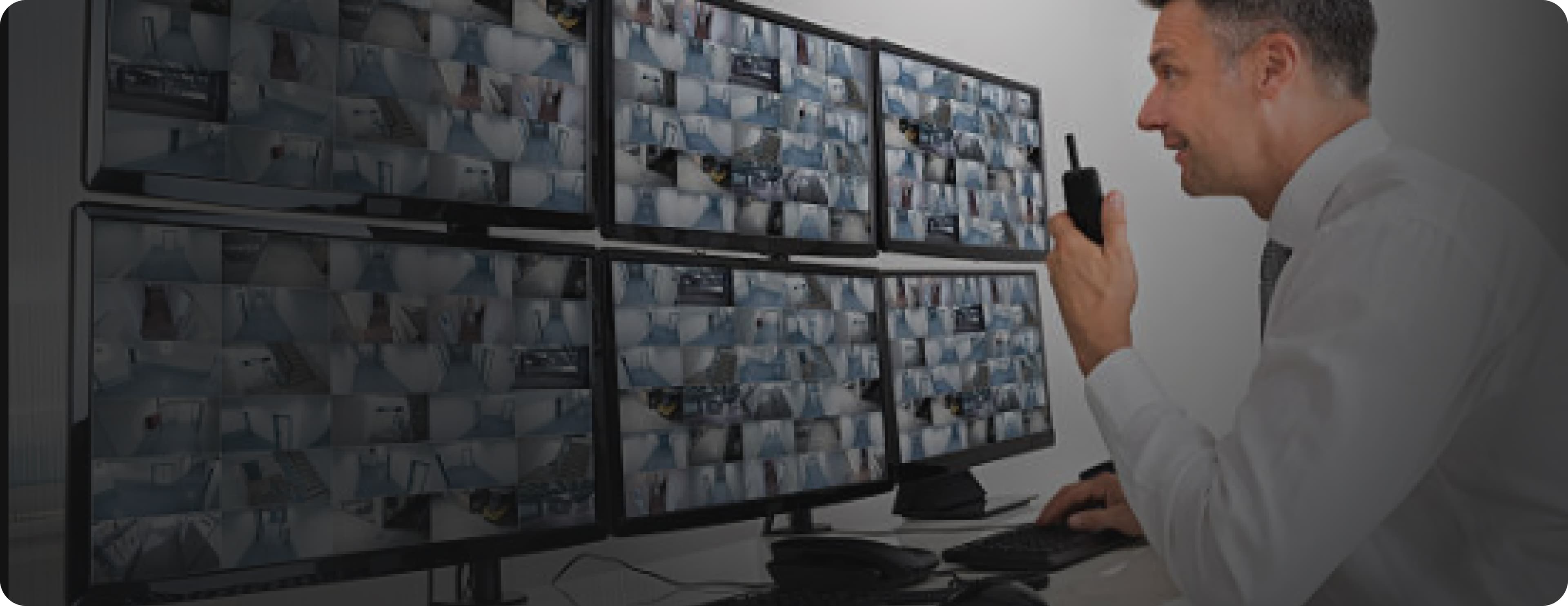
Hospitals operate around the clock in complex security environments where patients, staff, visitors, controlled substances, and sensitive areas require continuous protection. Traditional security methods such as manual CCTV monitoring, badge access reviews, and reactive incident response cannot identify every threat before it escalates.
Hospital safety and security AI software uses computer vision, machine learning, and real-time data integration to detect behavioral threats, monitor access anomalies, prevent infant abduction, identify potential diversion, and support faster emergency response. By connecting security and clinical data, AI helps hospitals move from reactive security operations toward proactive, data-driven protection.
Key Takeaways
Hospital safety and security AI software uses computer vision, machine learning, and real-time data integration to detect threats, prevent workplace violence, protect vulnerable patient populations, monitor access control, and coordinate emergency response across healthcare facilities
Workplace violence in healthcare has increased more than 200% in the past decade. AI behavioral threat detection that identifies escalating situations before violence occurs is the highest-value safety use case for most hospital security programs
The highest-value AI use cases are workplace violence prevention and de-escalation alerting, infant abduction prevention, controlled substance diversion detection, emergency response coordination, and access control anomaly detection
HIPAA compliance applies where security AI accesses or generates patient-linked data; behavioral risk flags linked to patient identity, clinical data used for threat assessment, and incident records involving identified patients are protected health information
AI video analytics for healthcare security must be implemented with specific attention to bias; computer vision models must be validated across the demographic diversity of the hospital patient and visitor population to ensure equitable threat detection performance
Integration with the EHR, patient flow systems, incident reporting platforms, and hospital communications infrastructure is what makes security AI clinically aware rather than operating as an isolated security system
Total development cost ranges from $60,000 for a focused workplace violence prevention MVP to $500,000 or more for a full AI-powered hospital safety and security platform
What Is Hospital Safety and Security AI Software?
Hospital safety and security AI software is an AI-powered platform that uses computer vision, machine learning, natural language processing, and real-time analytics to detect, monitor, and respond to safety and security threats across healthcare facilities.
Unlike traditional hospital security systems that mainly collect CCTV, access control, and incident data, AI analyzes these signals continuously to identify potential threats. It can detect behavioral escalation, patient elopement, infant abduction risks, controlled substance diversion, unauthorized access, and workplace violence.
By connecting security and clinical data, hospital safety and security AI software gives security teams real-time intelligence, improves situational awareness, and enables hospitals to move from reactive incident response toward proactive security operations.
Why Is AI Transforming Hospital Safety and Security in 2026?
How Serious Is the Workplace Violence Crisis in Healthcare?
Workplace violence in healthcare has increased more than 200% over the past decade. Healthcare workers are five times more likely to experience workplace violence than workers in other industries. Emergency department nurses, psychiatric unit staff, and patient transport personnel face the highest risk, with documented rates of physical assault that far exceed any other professional category.
The consequences are clinical as well as personal: staff who have experienced workplace violence have higher rates of burnout, higher turnover intent, and reduced clinical effectiveness. Facilities that cannot demonstrate meaningful workplace violence prevention face recruitment challenges and regulatory scrutiny under OSHA workplace violence prevention standards that are increasingly being applied to healthcare settings.
AI behavioral threat detection that identifies escalating patient or visitor behavior before violence occurs, giving security and clinical staff the opportunity to de-escalate rather than respond, directly addresses the workplace violence crisis in ways that reactive security cannot.
What Are the Financial Consequences of Hospital Security Failures?
Hospital security failures carry financial consequences that extend far beyond direct security incident costs. Workplace violence incidents result in workers' compensation claims, medical treatment costs, lost productivity from injured staff, and litigation costs that average $50,000 to $500,000 per serious incident. Infant abduction events, even unsuccessful attempts, trigger immediate regulatory review, significant reputational damage, and legal liability that can reach into the millions.
Controlled substance diversion the theft of opioids and other controlled substances from hospital pharmacies, medication carts, and anesthesia workstations costs US healthcare an estimated $70 billion annually and triggers DEA investigation, regulatory sanctions, and significant operational disruption when detected.
AI security platforms that prevent these specific incident types deliver financial ROI that is measurable, immediate, and significant at hospital operating scale.
Why Are Traditional Security Technologies Insufficient?
Traditional hospital security technologies CCTV cameras, badge access control, and uniformed security staff share a fundamental limitation: they generate data that humans must review and interpret. The volume of data that a large hospital's security systems generate far exceeds what security staff can continuously monitor, analyze, and act on.
A 500-bed hospital may have 500 or more CCTV cameras, 10,000 or more daily badge access events, and dozens of incident reports, nurse call activations, and security calls per day. No security team can continuously monitor this data volume manually. Important signals a patient pacing in an agitated pattern that precedes an assault, an employee accessing controlled substance dispensing equipment outside their clinical area at 3 am, a person entering the newborn unit who is not displaying the infant security band are consistently missed when security depends on human attention alone.
AI systems that continuously analyze all of these data streams simultaneously without fatigue, without distraction, and without the attention limitations that make comprehensive manual monitoring impossible provide security coverage that human staff alone cannot match.
What Are the Key Use Cases for Hospital Safety and Security AI Software?
Workplace Violence Prevention and Behavioral Threat Detection
Workplace violence in healthcare settings rarely occurs without warning signs. Escalating patient or visitor behavior agitated pacing, raised voice, aggressive posturing, confrontational body language typically precedes physical violence by minutes or longer. These behavioral signals are visible to experienced security and clinical staff who are watching but they are consistently missed when security staff are not monitoring the specific area where escalation is occurring.
AI behavioral threat detection using computer vision analyzes CCTV feeds continuously, detecting behavioral patterns associated with pre-violence escalation, generating real-time alerts to security staff with camera location and behavioral description, and enabling proactive de-escalation response before physical assault occurs.
For emergency departments, the highest-violence clinical environment in most hospitals, AI behavioral monitoring that provides continuous coverage of waiting rooms, triage areas, and patient care zones gives security staff early warning of escalating situations across the entire department simultaneously rather than only where security staff is physically present.
Our AI and ML solutions team builds behavioral threat detection models validated on healthcare-specific environments, trained on the specific behavioral patterns and environmental contexts of hospital settings rather than on generic public space surveillance data.
Infant Abduction Prevention
Infant abduction is one of the most emotionally devastating security events a hospital can experience and one of the most actively targeted by hospital security programs because of its consequences for patients, families, and institutional reputation. The Joint Commission has specific standards for infant security programs, and CMS conditions of participation require documented infant safety protocols.
AI infant abduction prevention systems integrate with electronic infant security tags, monitoring tag location continuously, detecting unauthorized removal of an infant from the designated security zone, identifying attempts to remove or defeat security tags, and generating immediate multi-channel alerts to security operations, nursing staff, and facility lockdown systems.
Beyond tag-based monitoring, AI video analytics can detect behavioral patterns consistent with infant abduction preparation: individuals lingering in nursery or mother-baby unit areas without patient affiliation, individuals wearing clothing items that obscure body outlines, and access control anomalies in infant unit corridors.
Controlled Substance Diversion Detection
Controlled substance diversion, the theft of opioids and other controlled medications by healthcare employees, is one of the most damaging and most difficult to detect security threats in hospital operations. Diversion by clinical staff nurses, anesthesiologists, and pharmacy technicians exploits legitimate clinical access to controlled substances in ways that security controls designed for external threat prevention do not address.
AI diversion detection systems analyze access patterns to automated dispensing cabinets, anesthesia workstations, and pharmacy controlled substance storage, identifying individual employee access patterns that deviate from clinical norms. An employee accessing controlled substance cabinets at unusual hours, in clinical areas outside their assignment, with an unusually high frequency of overrides, or with documentation inconsistencies between dispensed and administered quantities is exhibiting patterns that AI models can detect systematically across thousands of daily access events.
AI diversion detection operates at a scale and consistency that human supervisor review of access logs cannot match, identifying the subtle pattern deviations that experienced pharmacy and nursing managers recognize individually but cannot systematically screen for across an entire department's access history.
Elopement Prevention for High-Risk Patients
Patient elopement, the unauthorized departure of a patient who lacks the clinical capacity to safely leave the facility, is a patient safety emergency that can result in patient injury, death, and significant legal liability. High-risk populations include patients with dementia, patients with psychiatric diagnoses, patients who are intoxicated, pediatric patients, and patients at fall risk who may attempt to ambulate without assistance.
AI elopement prevention systems integrate patient risk stratification data from the EHR with real-time location system monitoring and access control events, generating alerts when a high-risk patient approaches an exit, activates an exit door, or is identified by video analytics in an exit zone without appropriate staff accompaniment.
Our EHR and EMR integration practice builds the clinical data integration that gives AI security systems access to patient risk stratification data, making elopement prevention clinically aware rather than applying uniform monitoring to all patients regardless of elopement risk.
Access Control Anomaly Detection
Hospital badge access systems generate thousands of access events daily, each recorded with employee identity, door location, and timestamp. Manual review of this data to detect security anomalies employees accessing areas outside their clinical authorization, after-hours access to restricted areas, and tailgating events where multiple people pass through a controlled door on a single credential scan is practically impossible at the volume that hospital access systems generate.
AI access control anomaly detection continuously analyzes badge access event data, learning each employee's normal access pattern and flagging deviations that suggest potential security concerns. Anomalies flagged include access to clinical areas inconsistent with the employee's role, repeated access attempts on restricted doors, access patterns consistent with after-hours area exploration, and statistical anomalies in access timing that suggest shared credential use.
Emergency Response Coordination
Hospital emergency response to mass casualty events, active threat situations, fire, hazardous material incidents, and utility failures requires rapid coordination across clinical, security, and administrative teams using information that comes from multiple systems simultaneously. Current emergency response coordination typically relies on overhead paging, phone trees, and radio communication, which is slow, prone to information inconsistency, and difficult to adapt as situations evolve.
AI emergency response coordination systems integrate real-time data from multiple sources security cameras, access control events, staff location systems, patient census data, and external emergency notification systems to generate a real-time situational awareness picture for incident commanders. AI-generated resource allocation recommendations, automated lockdown zone activation, and coordinated staff notification through mobile devices reduce response time and improve coordination effectiveness during security emergencies.
Parking and Perimeter Security
Hospital campus security extends beyond the building parking structures; perimeter access points and outdoor patient transport areas are security zones that require monitoring but where security staff coverage is typically sparse. AI video analytics for parking and perimeter security detect unauthorized vehicle access, identify individuals in restricted perimeter areas, and monitor patient transport zones for safety events including falls, medical emergencies, and personal safety incidents.
Staff Safety Monitoring in Isolation Environments
Clinical staff working in isolation rooms, during patient behavioral holds, and in psychiatric units operate in environments where personal safety monitoring is difficult; security cameras may not be present in clinical rooms, and staff may be unable to activate panic buttons during rapidly escalating situations. AI staff safety monitoring systems that use wearable panic alert devices, indoor location systems, and door-mounted behavioral sensors provide safety coverage in the clinical environments where staff are most at risk.
Visitor Management and Identity Verification
Hospital visitor management, controlling who enters patient care areas, verifying visitor identity against patient consent records, and monitoring visitor compliance with restricted access areas is a security function that is currently managed through manual processes that are inconsistently applied and easy to circumvent.
AI visitor management systems verify visitor identity against patient consent records at check-in, generate time-limited access credentials for specific patient rooms or clinical areas, detect visitors who have exceeded their authorized access area or access duration, and integrate visitor records with security incident history to flag individuals with prior security events.
What Are the Key Features of Hospital Safety and Security AI Software?
Real-Time Video Analytics Platform
Computer vision analysis of hospital CCTV feeds detecting behavioral escalation, monitoring access control zones, identifying infant security perimeter breaches, and flagging parking and perimeter security events with real-time alert generation and camera location identification for security staff response. Video analytics must process multiple concurrent camera feeds simultaneously with the latency required for real-time security alerting.
Behavioral Threat Scoring and Alerting
AI behavioral threat scoring that generates continuous risk assessments for individuals in security-monitored areas, escalating alert urgency as behavioral indicators accumulate and generating mobile alerts to security staff with specific behavioral description, camera location, and recommended response.
Infant Security Integration
Integration with electronic infant security tag systems Hugs, Halo, Stanley Healthcare) for continuous tag location monitoring, exit zone breach detection, and immediate multi-channel alert generation. AI behavioral monitoring overlay that provides additional detection capability beyond tag-based monitoring alone.
Access Control Integration and Anomaly Detection
Bidirectional integration with the hospital badge access control system ingesting real-time access events, detecting anomalous access patterns, and generating security alerts for access events that deviate from established norms. Our API integration services team builds integrations with major hospital access control platforms: Lenel OnGuard, Software House CCURE, Genetec, and Honeywell ProWatch, using standard access control integration protocols.
EHR Clinical Risk Integration
Integration with the EHR for patient risk stratification data, elopement risk flags, behavioral health status, dementia diagnosis, and fall risk, which gives security AI clinical awareness. Patient risk data integration enables targeted monitoring for high-risk patient populations without applying maximum security intensity to all patients regardless of risk.
Controlled Substance Diversion Analytics
Access pattern analysis for controlled substance dispensing systems Pyxis, Omnicell identifying individual employee access patterns that deviate from clinical norms across the dimensions most associated with diversion risk: timing, location, frequency, override rate, and documentation consistency.
Security Operations Dashboard
A real-time security operations center dashboard presenting active alerts by urgency, camera feeds for alerted events, an access control anomaly queue, and an incident management workflow giving security operations staff the integrated situational awareness to manage security across the facility from a single interface.
Our healthcare UI/UX design team designs security operations dashboards tested with real hospital security directors and security operations center staff because dashboards that present information in formats that require extensive training to interpret slow response time precisely when response time is most critical.
Mobile Alert Delivery for Security Staff
Mobile alert delivery to security staff smartphones and radios with camera feed access, alert details, incident status, and two-way communication capability that enables security staff to assess and respond to alerts from anywhere in the facility rather than requiring return to a central monitoring station.
Incident Reporting and Analytics
Structured incident documentation workflow, incident pattern analytics by location and incident type, trend analysis for repeat-offender individuals and high-risk locations, and regulatory compliance reporting for workplace violence prevention programs and Joint Commission Environment of Care documentation.
HIPAA-Compliant Data Architecture
Where security AI data intersects with patient identity, behavioral risk flags linked to patient records, elopement monitoring linked to patient clinical risk data, and incident records involving identified patients, HIPAA compliance is required. Every component of hospital safety and security AI software that handles patient-linked data must comply with HIPAA.
Our HIPAA-compliant software development practice builds the compliance architecture appropriate for security systems that operate at the intersection of physical security and patient health information.
How to Build Hospital Safety and Security AI Software: Step by Step
Step 1: Define the Facility Context and Priority Security Challenges
Building hospital safety and security AI software begins with defining the specific facility type acute care hospital, children's hospital, psychiatric facility, ambulatory surgery center and the priority security challenges. A Level I trauma center with high emergency violence rates has different priority use cases than a pediatric hospital with infant abduction prevention as its primary security concern or a long-term care facility where elopement prevention is the dominant security challenge.
Define priority use cases based on the specific incident history, regulatory compliance obligations, and security risk profile of the target facility and sequence AI capability development to address the highest-priority safety challenges first.
Step 2: Conduct a Security Technology Audit
Audit existing security technology infrastructure: CCTV camera coverage, access control system capabilities and API availability, infant security tag system, nurse call system, panic button locations, staff duress alarm systems, and existing security software. This audit defines both the integration requirements and the sensor data available for AI analysis.
Identify gaps in sensor coverage in clinical areas without adequate camera coverage, access points without badge control, and high-risk zones without dedicated security monitoring that require infrastructure investment before AI monitoring can provide adequate coverage.
Step 3: Map Clinical System Integration Requirements
Map the clinical system integrations that give security AI clinical awareness: EHR for patient risk data, patient flow systems for census and location data, behavioral health documentation for risk assessment data, and controlled substance dispensing systems for diversion monitoring.
For each integration, define the specific data elements required, the real-time versus batch access requirements, the HIPAA compliance implications of accessing patient-linked data for security purposes, and the appropriate data minimization approach that limits security system access to the minimum patient information necessary for the specific security function.
Step 4: Address HIPAA and Legal Compliance Requirements
Hospital safety and security AI systems operate at the intersection of physical security and patient privacy, creating compliance considerations that require legal and privacy counsel review before development begins. Specifically: which security monitoring activities require patient notification or consent, how patient health information accessed for security purposes must be protected, what data retention limitations apply to security video containing patient imagery, and whether state-specific patient privacy laws impose requirements beyond federal HIPAA for security monitoring in clinical spaces.
Workplace violence prevention programs also intersect with OSHA requirements, state workplace violence prevention laws, and Joint Commission Environment of Care standards, each of which may impose specific program documentation requirements that the security AI platform must support.
Our MVP and product strategy process addresses the full compliance landscape for hospital security AI HIPAA, OSHA, Joint Commission, and state-specific requirements as core components of the discovery phase before development begins.
Step 5: Run a Discovery Sprint
A structured discovery process validates the technical approach, defines the camera and sensor integration architecture, addresses the clinical and regulatory compliance requirements, and produces a validated development plan before engineering resources are committed.
For hospital security AI specifically, where the camera infrastructure assessment, AI model bias validation requirements, HIPAA compliance for patient-linked security data, and clinical system integration design are all decisions with significant downstream implications, the discovery phase is the highest-leverage investment in the project.
Step 6: Build the Video Analytics and Computer Vision Layer
Build the computer vision infrastructure: video stream ingestion from the CCTV camera network, human pose estimation and behavioral analysis models, behavioral threat scoring, and real-time alert generation. Computer vision models for healthcare security must be trained and validated on healthcare-specific environments; the behavioral patterns, demographic diversity, and environmental contexts of hospital settings are specific enough that general surveillance models perform poorly in clinical environments.
Validate model performance across the demographic diversity of the hospital's patient and visitor population, ensuring that behavioral threat detection does not exhibit performance disparities across race, age, gender, or physical appearance characteristics that would create inequitable safety concerns.
Step 7: Develop the Specific AI Models
For each priority use case, develop the specific AI models: behavioral threat scoring models for workplace violence prevention, access pattern anomaly detection models for controlled substance diversion, and spatial monitoring models for infant security and elopement prevention. Each model requires domain-specific training data, validation against relevant clinical and operational outcomes, and calibration of alert thresholds to balance detection sensitivity against false positive rate.
Step 8: Build Security System Integrations
Build integrations with the hospital's existing security technology CCTV system for video stream access, access control system for badge event data, infant security tag system for location monitoring, nurse call system for clinical alert correlation, and controlled substance dispensing systems for access pattern analysis. Each integration requires the specific protocol and API capabilities of the target system.
Step 9: Build Clinical System Integrations
Build EHR integration for patient risk stratification data with a data minimization architecture that limits security system access to the specific risk flags needed for elopement and behavioral monitoring without providing unnecessary patient clinical information to security systems. Build patient flow system integration for census and location data.
Step 10: Design the Security Operations Interface
Build the security operations center dashboard integrating alert queues, camera feeds, access control monitoring, incident management workflow, and mobile alert delivery in a unified interface designed for the specific operational context of hospital security operations.
Step 11: Implement HIPAA Compliance Architecture
Build HIPAA compliance architecture for all components that handle patient-linked security data, including encrypted storage and transmission of patient-linked security records, role-based access controls restricting patient health information access to security staff with documented need-to-know, audit logging of all patient-linked data access, and BAAs with all third-party services that process patient-linked security data.
Step 12: Conduct Bias Validation and Equity Testing
Before deployment, conduct systematic validation of computer vision model performance across demographic subgroups race, age, gender, body type to identify and address performance disparities that would result in inequitable security monitoring. Healthcare security AI that exhibits demographic performance disparities creates both safety equity concerns and legal liability.
Step 13: Pilot and Measure
Deploy in a structured pilot with specific safety outcome metrics: workplace violence incident rate change, security response time improvement, elopement event rate, controlled substance diversion detection rate, and staff safety satisfaction survey scores. Use pilot data to refine AI models and alert thresholds before facility-wide deployment.
Our DevOps and cloud solutions team builds the deployment infrastructure, video analytics processing pipeline, model performance monitoring, and bias drift detection that keep the hospital security AI platform performing accurately and equitably over time.
What Technology Powers Hospital Safety and Security AI Software?
Computer Vision and Video Analytics
Python with OpenCV and PyTorch is the standard technology stack for healthcare security computer vision. For human pose estimation and behavioral analysis, the core capability of behavioral threat detection, MediaPipe Pose and custom pose estimation models provide the skeletal keypoint detection that behavioral pattern analysis requires.
For behavioral threat scoring, classifying behavioral patterns as normal, concerning, or high-threat, ensemble models combining pose estimation features with temporal behavioral sequence analysis produce the most reliable threat classification across the variable environmental conditions of hospital settings.
For object detection relevant to security, infant security tag detection, weapon detection in appropriate contexts, and abandoned object detection, YOLO-based detection models fine-tuned on healthcare security-relevant object classes provide real-time detection performance.
Model inference must be optimized for real-time processing of multiple concurrent video streams GPU-accelerated inference using TensorRT or ONNX Runtime, edge computing deployment for latency-sensitive applications, and adaptive quality scaling that maintains real-time performance under variable camera feed loads.
IoT and Hardware Integration
ONVIF standard for IP camera integration providing a standardized interface for video stream access across camera manufacturers. RTSP (Real-Time Streaming Protocol) for video feed ingestion from existing CCTV infrastructure. MQTT for IoT device integration, including panic buttons, door sensors, and staff duress alarms. BACnet for building automation integration where security systems integrate with building management.
Infant security tag system integrations use manufacturer-specific APIs: Stanley Healthcare Hugs API, Halyard Halo system API for tag location data and zone breach events. RTLS (Real-Time Location System) integration for staff location tracking uses manufacturer-specific APIs for Zebra, CenTrak, and Midmark RTLS platforms.
Access Control Integration
Lenel OnGuard SDK, Software House CCURE RESTful API, Genetec Security Center SDK, and Honeywell ProWatch API provide the access control event data streams that access anomaly detection models require. OSDP (Open Supervised Device Protocol) for access control device integration, where standard protocols are preferred over proprietary SDKs.
Backend and Data Infrastructure
Python with FastAPI for the primary API layer. PostgreSQL for structured security event, incident, and access control data. TimescaleDB for time-series video analytics event data and continuous access control event streams. Redis for real-time alert state management and security operations dashboard caching. Apache Kafka for high-volume video analytics event streaming in large multi-camera deployments.
For video storage, security video is generated at extremely high volumes and requires specific retention and access control management. AWS S3 with lifecycle policies implementing retention schedules, access-controlled retrieval for incident investigation, and encryption at rest for video containing patient imagery.
Cloud and Edge Architecture
Edge computing deployment for video analytics inference processing video streams locally at the camera or at an on-premises edge computing node rather than transmitting full video streams to the cloud for processing reduces bandwidth requirements and provides sub-second alert latency for real-time security response. AWS IoT Greengrass or Azure IoT Edge provide managed edge computing infrastructure for healthcare security AI deployments.
Cloud backend for security operations data, analytics, incident management, and reporting with AWS HIPAA BAA configuration for components that handle patient-linked security data. AWS CloudTrail for audit logging of all patient-linked data access.
What Are the HIPAA and Compliance Requirements for Hospital Security AI?
When Does Hospital Security AI Require HIPAA Compliance?
Hospital security AI systems require HIPAA compliance when they access, generate, or store data that constitutes patient-linked protected health information. Specific scenarios that trigger HIPAA compliance requirements include EHR integration that accesses patient risk flags for elopement or behavioral monitoring, incident records that identify the patient involved in a security event, security video that can be linked to an identified patient's medical record, and behavioral risk assessments that are incorporated into patient clinical records.
Security AI systems that operate without any patient identity linkage, monitoring common areas and non-clinical spaces without connecting observations to identified patients, have reduced HIPAA applicability, though clinical counsel review is essential because the boundaries can be fact-specific.
What Are the Data Minimization Requirements for Security AI?
HIPAA's minimum necessary standard requires that access to patient health information be limited to the minimum necessary for the specific purpose. For hospital security AI, this means that security systems should access only the specific patient risk flags needed for each security function, not the full patient clinical record. An elopement prevention system needs the patient's elopement risk flag and room location; it does not need the patient's diagnosis, medication record, or laboratory results.
Building data minimization into the security AI architecture from the beginning specific data access permissions for specific security functions rather than broad EHR access- is both a compliance requirement and a data governance best practice.
What Joint Commission and OSHA Requirements Apply?
Joint Commission Environment of Care Standard EC.02.01.01 requires healthcare facilities to manage risks to patient safety from security-related events. The standard requires documented security risk assessments, written security management plans, security education for staff, and post-event response procedures. Security AI systems that generate documentation supporting these program requirements, incident analytics, risk assessment data, and security event records support Joint Commission compliance.
OSHA's guidelines for preventing workplace violence in healthcare settings increasingly reference technology-enabled prevention approaches, behavioral monitoring, de-escalation alert systems, and panic alert devices as appropriate engineering controls for workplace violence prevention. AI behavioral threat detection systems that document early warning detection and response activation provide the engineering control evidence that OSHA compliance documentation requires.
What Are the Common Mistakes to Avoid When Building Hospital Security AI?
1. Deploying Computer Vision Without Demographic Bias Validation
Computer vision models for behavioral threat detection that have not been validated across the demographic diversity of the hospital population may exhibit performance disparities, detecting threatening behavior more reliably for some demographic groups than others. This is not just an equity concern it is a liability concern and a patient safety concern. Systematic bias validation before deployment is a non-negotiable requirement for healthcare security AI that monitors patient populations.
2. Building Without Clinical Staff Involvement in Alert Design
Security alerts generated by AI behavioral threat detection that are not designed in collaboration with clinical staff nurses, behavioral health specialists, and emergency physicians will generate alert types and urgency levels that do not match clinical reality. Clinical staff who receive alerts that are consistently not actionable will stop responding to them. Alert design for healthcare security AI must incorporate clinical expertise on behavioral escalation patterns, patient population characteristics, and realistic response thresholds.
3. Treating Security Video as Non-PHI Automatically
Security video in clinical spaces that can be linked to identified patients through facial recognition, room number context, or medical record number correlation may constitute PHI under HIPAA. The automatic assumption that security video is outside HIPAA's scope is incorrect for healthcare settings where patients appear in monitored spaces. Legal and privacy counsel review of the HIPAA status of security video in clinical spaces is required before deployment.
4. Implementing Infant Security AI Without Clinical Partnership
Infant security AI that operates independently of clinical infant identification workflows, without integration with the clinical infant registration system, without alignment on what constitutes an authorized caregiver versus an unauthorized individual in the infant security zone will generate false alarms that erode nursing staff trust in the system. Infant security AI implementation requires tight clinical partnership with nursing leadership and patient safety teams.
5. Alert Volume That Overwhelms Security Operations
Security AI systems calibrated for maximum detection sensitivity minimizing missed threats at the cost of high false positive rates, generate alert volumes that overwhelm security operations staff and result in the alert dismissal behaviors that eliminate the safety value of the system. Alert calibration that produces actionable alerts at volumes that security staff can realistically investigate and respond to is as important as detection accuracy.
6. No Simulation Training for Emergency Response AI
AI emergency response coordination tools that have not been exercised in simulation scenarios before a real mass casualty event are not useful during the event. Security staff who have never used the system cannot effectively utilize AI coordination tools under the cognitive pressure of an actual emergency. Simulation-based training on AI emergency response tools is a safety requirement before clinical deployment.
How Does Codieshub Build Hospital Safety and Security AI Software?
At Codieshub, we build hospital safety and security AI software for healthcare facilities and health tech companies that need security platforms designed for the specific clinical environment, patient population diversity, regulatory compliance obligations, and safety culture requirements of healthcare, not general-purpose surveillance AI adapted from commercial security settings.
Every engagement begins with our MVP and product strategy process, which addresses facility security risk assessment, priority use case definition, camera and sensor infrastructure audit, clinical system integration requirements, HIPAA compliance analysis for patient-linked security data, Joint Commission and OSHA compliance requirements, and demographic bias validation planning before production code is written.
Our AI and ML solutions team builds behavioral threat detection models validated on healthcare-specific environments with demographic bias validation, infant security behavioral monitoring systems, controlled substance diversion detection models, elopement prevention AI with clinical risk integration, and access control anomaly detection with model performance monitoring and bias drift detection built in from the beginning.
Our EHR and EMR integration team builds the clinical data integrations that give security AI clinical awareness of patient risk flags for elopement prevention and behavioral health risk data for threat assessment, with the data minimization architecture that HIPAA compliance requires. Our API integration services team builds access control system integrations, infant security tag system connections, and controlled substance dispensing system interfaces.
Our healthcare UI/UX design team designs security operations center dashboards and mobile alert interfaces tested with real hospital security directors and security operations staff. Our HIPAA-compliant software development practice ensures full compliance for patient-linked security data with the specific HIPAA considerations that healthcare security environments create. And our DevOps and cloud solutions team builds the edge computing video analytics infrastructure, high-availability security operations backend, and bias monitoring pipeline that keeps the hospital security AI platform accurate, equitable, and operationally reliable.
Conclusion
Hospital safety and security AI software helps healthcare facilities detect threats earlier, respond faster, and protect patients, staff, and visitors. By analyzing security and clinical data in real time, it supports workplace violence prevention, infant abduction protection, controlled substance monitoring, and patient elopement prevention.
AI does not replace security officers or clinical teams. Instead, it provides actionable intelligence that strengthens hospital safety operations, improves situational awareness, and supports proactive threat management.
At Codieshub, we build hospital safety and security AI software tailored to healthcare facilities and health tech companies. Our solutions help organizations address security challenges while supporting compliance and operational efficiency.
Ready to build a safer healthcare environment? Schedule a Discovery Call to discuss your requirements and receive a tailored development and compliance game plan within 48 hours.
Frequently Asked Questions
1. What is hospital safety and security AI software?
Hospital safety and security AI software uses computer vision, machine learning, and real-time system integration to detect behavioral threats, prevent infant abduction, identify controlled substance diversion, monitor patient elopement, detect access anomalies, and coordinate emergency responses. It enables hospitals to move from reactive security operations to proactive, continuous protection.
2. How does AI behavioral threat detection prevent workplace violence in hospitals?
AI behavioral threat detection analyzes hospital CCTV feeds using computer vision to identify warning signs such as agitated pacing, aggressive posturing, and confrontational body language. The system generates real-time alerts with camera location and behavioral information, allowing security teams to intervene and begin de-escalation before a situation develops into physical violence.
3. Does hospital security AI software need to be HIPAA compliant?
Hospital security AI software must comply with HIPAA when it accesses, generates, or stores patient-linked information. Systems using EHR risk flags, patient-specific incident records, or health-related security data may handle PHI. Data minimization helps reduce compliance risks by limiting access to only the patient information required for specific security functions.
4. How does AI detect controlled substance diversion by healthcare employees?
AI diversion detection analyzes controlled substance access patterns from automated dispensing cabinets and storage systems. It can identify unusual timing, locations, access frequency, overrides, and documentation inconsistencies. By analyzing thousands of access events, AI can detect patterns that may indicate diversion and require further investigation by hospital security or compliance teams.
5. What is the demographic bias risk in hospital security AI and how is it addressed?
Hospital security AI can produce performance differences across racial, age, or gender groups when computer vision models are trained on non-representative data. Hospitals can address this risk through demographic subgroup testing, continuous bias monitoring, representative training data, and model retraining when meaningful performance disparities are identified during validation or production use.
6. How does hospital security AI integrate with clinical systems?
Hospital security AI can integrate with EHRs, patient flow systems, and controlled substance dispensing platforms. HL7 and FHIR interfaces can provide specific risk indicators, such as elopement risk, while limiting unnecessary patient information. Each integration requires HIPAA review, minimum-necessary data access, secure APIs, and appropriate controls for sensitive healthcare information.
7. How long does it take to build hospital safety and security AI software?
Development time depends on the platform's scope and integrations. A focused MVP can take three to six months, while a mid-level platform may require six to twelve months. Enterprise systems with multi-facility coverage, emergency coordination, AI monitoring, and clinical integrations can take twelve to twenty-four months to complete.
8. How much does hospital safety and security AI software cost to build?
A focused MVP typically costs $60,000 to $120,000, while a mid-level platform may cost $120,000 to $280,000. Enterprise platforms can cost $280,000 to $500,000 or more. Costs depend on AI development, camera integration, clinical system complexity, HIPAA architecture, bias validation, dashboards, and ongoing maintenance requirements.