
InsightsSaaS
SaaS Development Cost Guide 2026 for Startups & Businesses
Discover SaaS development costs in 2026—from MVP to full platforms. Get stage-by-stage breakdowns, hidden costs, and expert budget tips.
In today’s fast-growing SaaS market, understanding SaaS product development costs is essential for startups and businesses. Building a software as a service product requires planning, budgeting, and selecting the right development team to create scalable, cloud-based SaaS Solutions.
The total cost depends on many factors, including design, development, testing, deployment, and ongoing updates. By knowing the SaaS product development process, businesses can avoid hidden expenses, improve user experiences, and launch a successful SaaS product that meets market demands.
A clear understanding of costs also helps in project management, ensuring efficient workflows, timely delivery, and robust security measures for your SaaS application development. Whether you’re building a minimum viable product (MVP) or a full-featured solution, knowing the cost upfront is key to long-term success.
This guide explains everything you need to know about SaaS application development cost, including stages, timelines, hidden costs, and ways to optimize your budget.
What You Will Learn in This Guide
What is SaaS Product Development Cost?
SaaS Product Development Cost Breakdown by Stages
Total SaaS Product Development Cost Estimate
Key Factors Affecting SaaS Product Development Cost
Hidden SaaS Development Costs Startups Ignore
How to Reduce SaaS Product Development Cost
Developer Rate Breakdown by Region (2026)
Full SaaS Development Budget Table (2026)
SaaS Cost Optimization Best Practices
How Codieshub Helps Optimize SaaS Product Development Cost
Final Thought
Frequently Asked Questions (FAQs)
What Is SaaS Product Development Cost?
SaaS product development cost refers to the total expenses involved in building a software as a service product from concept to launch. It includes planning, design, coding, testing, deployment, and ongoing updates. Understanding these costs helps startups and businesses budget effectively and avoid surprises.
The cost varies depending on the complexity of the SaaS application development, team size, features, and the use of cloud-based SaaS Solutions. A simple minimum viable product (MVP) may cost less, while a full-featured platform with advanced functionality, robust security measures, and automated testing will require a higher investment.
By calculating SaaS product development costs upfront, businesses can focus on delivering user-friendly experiences, optimizing workflows, and creating a successful SaaS product that meets customer needs and market demand. Proper cost planning also ensures smooth project management and faster time to market.
SaaS Product Development Cost Breakdown by Stages
The cost of building a SaaS product is divided into different stages. Each stage plays an important role in building a user-friendly and scalable product.
1. Market Research & Planning
This stage includes understanding the target audience, analyzing competitors, and identifying pain points in the SaaS market.
2. UI/UX Design
Design focuses on creating simple and engaging user experiences that improve product usability.
3. Development
This is the core stage where developers build features, backend systems, and integrations.
4. Testing
Using automated testing ensures the product works smoothly and reduces errors.
5. Deployment
The product is launched on cloud platforms for real users.
All these stages contribute to overall Software Development Costs, making proper planning essential.
Total SaaS Product Development Cost Estimate
The total cost of developing a SaaS product varies depending on complexity:
Basic SaaS Product: $10,000 – $30,000
Medium Complexity: $30,000 – $80,000
Advanced SaaS Platform: $80,000 – $200,000+
Businesses often invest in Custom Software Development to build tailored solutions that match their exact needs and provide better long-term value.
Key Factors Affecting SaaS Product Development Cost
Several factors influence the total cost:
Features and functionality
Technology stack
Team size and expertise
Integration with third-party tools
Security requirements
A strong MVP & Product Strategy helps businesses start with a minimum viable product MVP, test ideas, gather user feedback, and reduce unnecessary costs.
Hidden SaaS Development Costs Startups Ignore
Many startups overlook hidden costs, which can increase the total budget:
Maintenance and updates
Cloud hosting and storage
Security improvements
Third-party integrations
Scaling infrastructure
Businesses investing in Custom Web Development often need to consider these additional costs for long-term success.
How to Reduce SaaS Product Development Cost
You can reduce SaaS costs with smart strategies:
Start with a minimum viable product MVP
Focus on essential features first
Use agile project management methods
Reuse existing tools and frameworks
Continuously collect user feedback
Working with Top Custom Software Development experts helps optimize development and reduce unnecessary expenses.
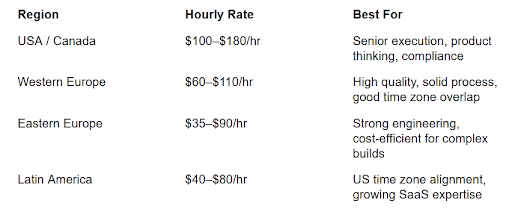
Developer Rate Breakdown by Region (2026)
Full SaaS Development Budget Table (2026)
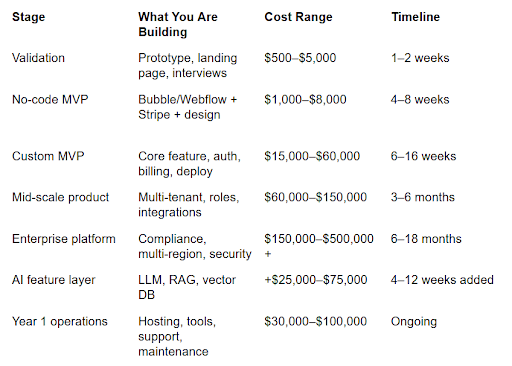
Timelines also vary based on features, integrations, and testing requirements. Many companies plan based on the industries we serve to ensure solutions meet specific business needs.
SaaS Cost Optimization Best Practices
To build a cost-efficient SaaS product, follow these best practices:
Focus on core features first
Use cloud-based, scalable infrastructure
Implement automated testing
Improve performance using real-time monitoring
Continuously update based on user feedback
Modern technologies like AI & Machine Learning can also help optimize processes, improve performance, and enhance user experiences.
How Codieshub Helps Optimize SaaS Product Development Cost
Codieshub helps businesses build cost-effective and scalable SaaS solutions.
Their approach includes:
Strategic planning and market research
Efficient development processes
Scalable cloud-based architecture
Continuous optimization
They also focus on UI/UX Design to create user-friendly platforms that improve engagement and customer satisfaction.
Final Thought
Building a successful SaaS product requires proper planning, smart budgeting, and the right development approach. By understanding the SaaS product development cost, businesses can make better decisions and avoid unnecessary expenses.
Focusing on user needs, scalability, and performance ensures long-term success in the competitive SaaS market. If you are ready to start your SaaS journey, book a call with our experts to get personalized guidance and cost estimation.
Frequently Asked Questions (FAQs)
1. What is the average cost to develop a SaaS product?
The cost of developing a SaaS application depends on complexity, features, and development team rates. Simple MVPs may cost less, while full-featured cloud-based SaaS solutions with robust security measures and integrations can cost significantly more. Planning helps control software development costs.
2. How long does it take to build a SaaS product?
Developing a SaaS solution can take 3–12 months, depending on scope, complexity, and user experience design. Building an MVP first accelerates delivery, allows real-time feedback, and reduces risk before full-scale deployment. Efficient project management ensures timely delivery and better user-friendly SaaS applications.
3. What hidden costs should startups consider?
Startups often overlook costs like third-party API integrations, cloud hosting, post-launch maintenance, and ongoing Custom Web Development. Including these in your budget ensures a realistic SaaS product development process, preventing delays and unexpected overspending while maintaining user experiences and scalability.
4. How can I reduce SaaS development costs?
Costs can be reduced by starting with a Minimum Viable Product (MVP), automating testing, prioritizing critical features, and using top custom software development practices. Early planning, clear specifications, and iterative development help optimize SaaS development costs without compromising quality or user experience.
5. Why is MVP important in SaaS development?
An MVP allows startups to launch quickly, gather user feedback, and validate product-market fit without overinvesting. It supports effective digital transformation planning, ensures user-friendly SaaS applications, and helps allocate budget efficiently before scaling the full SaaS solution.
6. How do I choose the right SaaS development team?
Choose a team experienced in cloud-based SaaS development, automated testing, and delivering robust security measures. A skilled team ensures your product is scalable, user-friendly, and cost-effective while handling integrations, updates, and ongoing maintenance efficiently.
7. How can I measure the success of my SaaS product?
Measure success through real-time metrics, including user adoption, engagement, revenue growth, and feedback. Monitoring pain points, usability, and system performance helps refine your SaaS product development process, improve user experiences, and ensure long-term success in the SaaS market.